Choose timezone
Your profile timezone:
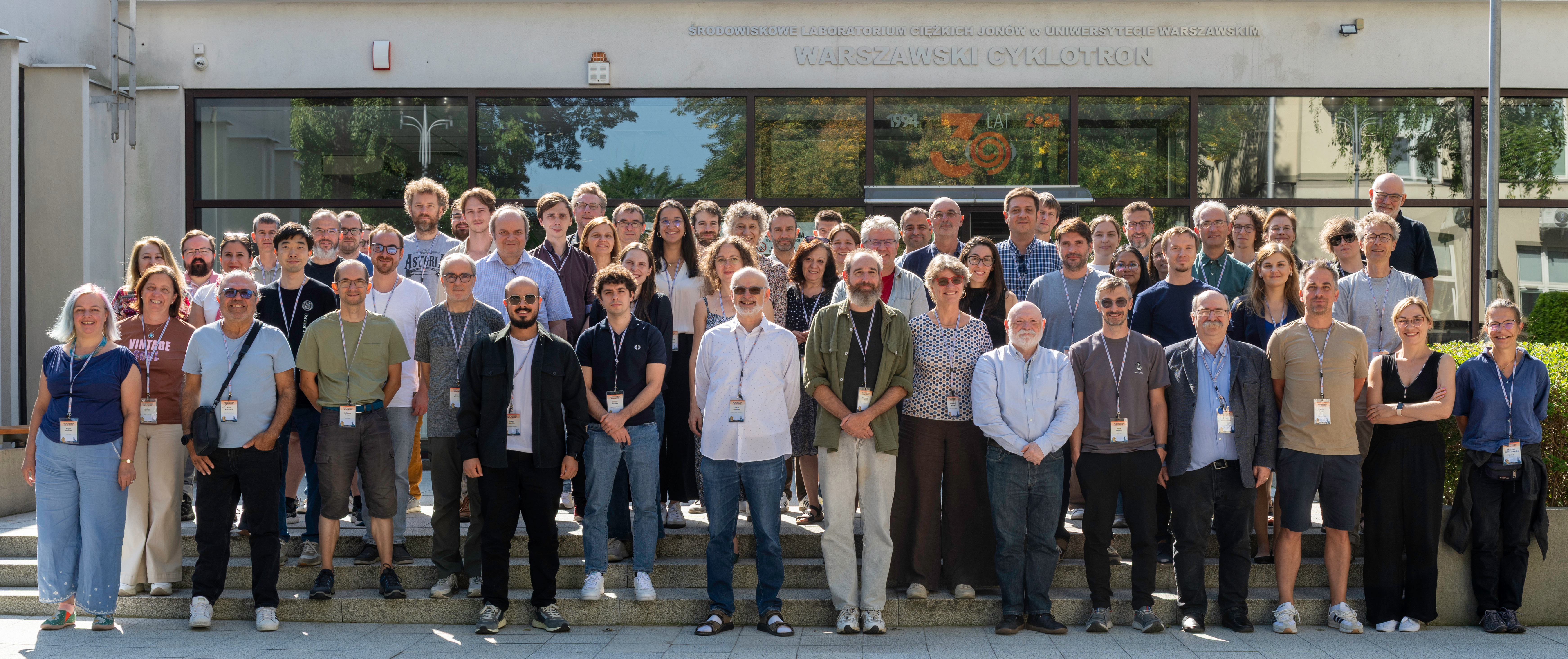
The 26th AGATA Week and ACC meeting will be held in HIL Warsaw from September 7th to 11th, 2026
AGATA Week is an important annual event of the AGATA collaboration, and all collaboration members are invited to join it in person. However, we understand that remote participation may be necessary. A zoom link is provided to remote participants.
Topic: 26th AGATA Week
Time: Sep 7, 2026 08:45 AM Warsaw
Join Zoom Meeting
https://uw-edu-pl.zoom.us/j/91084956430?pwd=M3uAjg8SvtguDcHzjbCSbGSChEkSzg.1
Meeting ID: 910 8495 6430
Passcode: 864387
Organizing committee:
AGATA Management Board
Local organizing committee:
Katarzyna Wrzosek-Lipska (Chair)
Katarzyna Hadyńska-Klęk
Michalina Komorowska
Agata Krzysiek
Jolanta Matuszczak
Iwona Piętka
Justyna Samorajczyk-Pyśk
Grzegorz Szymanek
Magda Zielińska
ACC Chair Jose Javier Valiente Dobon
Topic: 26th AGATA Week - ACC Closed session
Time: Sep 7, 2026 04:30 PM Warsaw
Join Zoom Meeting
https://uw-edu-pl.zoom.us/j/92559533093?pwd=91VsLcCMUCKDxVAqi5uP7ML1XPUZHP.1
Meeting ID: 925 5953 3093
Passcode: 546576
Existing data on quadrupole strength in 8Li exceed ab initio calculations by more than an order of magnitude, which, in turn, reproduce accurately B(E2) values in nearby A= 7−9 few-body nuclei, including large values classically associated with molecular rotations of nucleon clusters. If correct, such an enhanced quadrupole strength would be an anomaly in this mass region since it does not easily emerge from the nucleonic dynamics and the most advanced ab initio interactions. We report on a low-energy Coulomb-excitation experiment to directly extract the B(E2;2+ →1+) value from the ground state to the first excited state at 981 keV in 8Li in a model-independent way, using the AGATA-SAURON setup and a radioactive 8Li beam provided by the EXOTIC facility, impinging on a 109Ag target. Online and preliminary results of this first experiment with a radioactive beam and AGATA at LNL will be discussed.
Following the experiment EXP. 22. 72, which aimed to measure the 10C superallowed beta-decay branching ratio (BR), the new experiment had been suggested based on the improvement of the experimental setup. The increase in the maximum validation rate of AGATA from 1 kHz to 4 kHz per crystal enables us to obtain a four-fold increase in the statistics. In addition, the relay of the beam switching system and the AGATA trigger prevent the problem of time misalignment between the start of the beam-on period and the end of the data writing. The shielding for the scattered protons inside the chamber was optimized, and a custom Tantalum target holder was designed to reduce the counting rate per crystal in AGATA. The 1-day test beamtime (EXP. 24. 12) demonstrated that the experiment would be feasible.
The experiment was performed in July-August 2025. An 8-MeV, 30-pnA (2-pnA for in-beam) proton beam from the XTU-Tandem impinged on a stack of 1-mg/cm2 10B targets with carbon backing. The beam was on the target for 60 s and off for 120 s to measure the beta-delayed gamma rays. The measurement with a continuous beam was performed as well. We observed more than 1.5 million 1022-keV 10C beta-delayed gamma rays, which would give an opportunity to reach a per-mil-level precision for the superallowed beta-decay BR measurement. The progress on the analysis will be presented. Moreover, some preliminary results on the EXP. 22. 72 will be introduced.
Lifetime measurement of astrophysically relevant 6.79 MeV state in Oxygen-15 with sub-fs precision.
Inverse beta decay (IBD) is a crucial process historically employed to study neutrinos.
For example, discrepancies between measured and expected IBD rates on $^{71}$Ga, the so-called gallium anomaly, suggest the possible existence of sterile neutrinos. A recent publication showed that the poorly known associated Nuclear Matrix Element (NME) can be extracted measuring the decay width from the Isobaric Analog State (IAS) in $^{71}$Ge. In this talk, I will present the current results from the experiment 24.027 carried out in February 2025 and aimed at studying the feasibility of this measurement.
We present the analysis of an experiment performed at INFN LNL in November 2023 aimed at studying the two-octupole phonon collectivity in $^{96}$Zr. The goal of the experiment was to perform a $\gamma$-decay branching ratio measurement from the 6$^+$ to the 3$^-$ state, so as to extract the B(E3; 6$^+$ -> 3$^-$) value. If large, this parameter would indicate for the level to be a member of the 3$^-$x3$^-$ multiplet. The state was populated via the $^{96}$Zr(p,p’)$^{96}$Zr proton inelastic scattering and the scattered protons were measured in the SAURON Double-Sided Silicon Strip detector. These were used to select the reaction channel of interest, in coincidence with the $\gamma$ rays in the AGATA array.
The EUCLIDES array is a silicon ΔE-E detector system designed for the detection and identification of charged particles in nuclear physics experiments, and has been extensively used as an ancillary detector for $\gamma$-ray spectroscopy. This contribution will provide an overview of the EUCLIDES array, including its detector configuration, main characteristics and coupling with $\gamma$-ray spectrometers. The performance of the detector system will also be discussed, with particular focus on its energy resolution and on recent characterization measurements.
The nickel isotopes offer a unique laboratory for investigating shape evolution in the vicinity of the doubly magic N=Z nucleus, Ni (Z=N=28), which should exhibit structural properties similar to those observed in the Z=N=20 region. Indeed, observation of the SD structures was also reported in Ni and was explained as the result of multiparticle-multihole excitation, as in the case of Ca. However, recently the questions on the validity of Z/N=28 as a good magic number have been brought up, triggering the discussion on the deformation in the nickel region, including the signatures of shape coexistence. Microscopic and collective properties in the vicinity of Ni shall be evaluated with dedicated measurements of the deformation and the neighboring nuclei.
Coulomb excitation studies focused on the structure of stable Ni isotopes have been undertaken at INFN LNL and at the IJC Lab in Orsay. These, together with the recent findings from the gamma-ray and electron spectroscopy measurements reporting the unexpectedly large transition strengths for the decay of 2$_2^+$ in Ni isotopes, shall bring crucial information enabling further discussion on the electromagnetic properties of Ni nuclei.
Coulomb excitation of a $^{60}$Ni beam impinging on a $^{208}$Pb target was performed at INFN LNL, Italy, in October 2023 (experiment 23.08). The current status of the data analysis will be presented.
For several decades, stable even-mass Cd isotopes have been considered to be textbook examples of multiphonon spherical vibrators [1] based on the excitation energy pattern of their low-lying states. However, a detailed study of $^{110,112}$In $\beta^{+}$/EC decay and $^{112}$Ag $\beta^{-}$ decay, as well as subsequent beyond-mean-field theoretical calculations [2-6] suggested instead the presence of multiple shape coexistence in the $^{110}$Cd and $^{112}$Cd isotopes. To verify this hypothesis, it is essential to determine the shapes of low-lying $0^+$ states in stable even-even Cd nuclei. The Coulomb-excitation method [7], which enables a model-independent analysis of nuclear shapes through the use of quadrupole sum rules [8,9], provides a powerful tool for this type of research.
The Coulomb excitation of $^{110}$Cd [10] and $^{112}$Cd [11] using a 187-MeV $^{60}$Ni beam were performed at the National Institute for Nuclear Physics - Legnaro National Laboratories, Italy. These experiments were a part of a broader program focused on systematic Coulomb-excitation studies of even-even Cd isotopes initiated with measurements of $^{110}$Cd using $^{14}$N and $^{32}$S beams at the Heavy Ion Laboratory, University of Warsaw [6].
The $^{60}$Ni + $^{110,112}$Cd experiments were carried out using the AGATA $\gamma$-ray tracking spectrometer [12,13] and the particle detection array SPIDER [14]. In both cases about 20 states of both negative and positive parities were populated up to about 3 MeV of excitation energy, including, in particular, the $0^+_{1,2,3}$ states.
The analysis of $^{110}$Cd focuses on the~extraction of the $\gamma$-ray intensities from which a set of electromagnetic matrix elements will be obtained, including quadrupole moments of excited states. This will provide insight into the nuclear shape of the $0^+_2$ and $0^+_3$ states. The preliminary result on the overall deformation of $0^+_3$ state in $^{110}$Cd will be presented. Additionally, the current status of the on-going analysis of the AGATA data collected for $^{112}$Cd will be reported.
References
[1] R.F. Casten, Nuclear Structure from a Simple Perspective (Oxford Univ. Press 1990)
[2] P.E. Garrett et al., Phys. Rev. C 86 (2012) 044304.
[3] P.E. Garrett et al., Phys. Rev. C 101 (2020) 044302.
[4] P.E. Garrett et al., Phys. Rev. Lett. 123 (2019) 142502.
[5] P.E. Garrett et al., Acta Phys. Pol. B Proc. Suppl. {19} (2026) 1-A14
[6] K. Wrzosek-Lipska et al., Phys. Lett. B {875} (2026) 140315
[7] M. Zielinska, Low-Energy Coulomb Excitation and Nuclear Deformation, in: The Euroschool on Exotic Beams, vol.VI, S.M. Lenzi and D. Cortina-Gil (eds.) Lecture Notes in Physics { 1005}, pp. 43-86 (Springer, 2022)
[8] D. Cline, Annu. Rev. Nucl. Part. Sci. 36 (1986) 683.
[9] K. Kumar, Phys. Rev. Lett. 28 (1972) 249.
[10] I.Z. Pietka et al., Acta Phys. Pol. B Proc. Suppl. 18 (2025) 2-A26
[11] K. Jakowinicz, BSc. thesis in preparation. University of Warsaw, Poland
[12] S. Akkoyun et al., Nucl. Instrum. Methods A668 (2012) 26.
[13] J.J. Valiente-Dob\'on et al., Nucl. Instrum. Methods A1049 (2023) 168040.
[14] M. Rocchini et al., Nucl. Instrum. Methods A971 (2020) 164030.
Excited reaction products from the $^{136}\text{Xe}$ + $^{208}\text{Pb}$ system at 1 GeV were investigated using the high-resolution $\gamma$-ray tracking array AGATA coupled to the mass spectrometer PRISMA at LNL, positioned at the grazing angle. For the beam-like fragments, energy $E$, atomic number $Z$, velocity $\beta$, charge state $q$, and mass number A were measured over the range $Z=52$-$58$, enabling a clean selection of the nuclei of interest. Kinematic coincidences were exploited to enhance the identification of the hard-to-reach neutron-rich lead isotopes on the target-like side. Mass-yield distributions have been extracted and compared with calculations from the GRAZING model for MNT reactions. Based on the relative cross-section systematics for different transfer channels, the capabilities and limitations for the production of the hard-to-reach neutron-rich isotopes with this experimental method will be discussed. In particular, neutron evaporation shifts the final isotope distribution towards less neutron-rich nuclei and therefore limits the experimental access to the most neutron-rich target-like products. Furthermore, delayed $\gamma$-ray spectroscopy of stopped target-like nuclei provides access to isomeric states populated in the transfer reaction. Results on excited states of beam-like nuclei in the Xe–Ba mass region will be discussed.
In December 2022, an experiment was performed at INFN-LNL with a $^{208}$Pb beam at 1300 MeV impinging on a $^9$Be target, using the inverse kinematics fusion-fission reaction for both nuclear structure and reactions studies. The experiment was performed using the AGATA γ-ray tracking array coupled to the magnetic spectrometer PRISMA [1–3]. This setup allowed one to measure the γ rays from the de-excitation of the fission fragments and to study the dynamics of the fission of
the compound nucleus, $^{217}$Rn.
One of the interesting nuclear structure issues that can be tackled in the neutron-rich region reached through the fission of this system is the evolution of the shell gap at N = 50. The observation of the reduction of the N = 50 shell gap [4, 5] is a phenomenon that motivated different measurements in the N = 50 isotones towards 78Ni. In particular, estimates starting from mass measurements show a decrease of the N = 50 gap size from Z = 40 until $^{82}$Ge, while for $^{80}$Zn a re-increase is observed [4, 5]. A second method to estimate the gap size is with the energy of medium-spin states in N = 50 even-even isotones. The fusion-fission reaction mechanism is an effective production method for spectroscopy of these levels because it can populate states at higher spins than transfer reactions, up to 6-8 units of angular momentum [6]. While the production cross section for the very exotic N = 50 nuclei with Z < 31 becomes small, the less neutron-rich isotopes in this region are populated with higher yields and a more detailed spectroscopy of their excited levels is possible.
In parallel to the γ-ray spectroscopy of the energy levels of the fission products, the measurement of the fragments with the large acceptance spectrometer PRISMA gives access to key quantities for the description of the fission dynamics of the $^{217}$Rn compound nucleus. In recent studies, the role of nuclear structure in the dynamics of fission has been investigated with different systems in the actinide region. These studies showed that even in highly-excited fissioning systems, such as $^{250}$Cf at E∗ = 45 MeV [7], where the high excitation energy is expected to wash out the shell effects and produce a symmetric fission, contributions from different fission modes associated with structure effects could not be excluded. Therefore, the
fusion-fission of $^{217}$Rn, which lies in a region where symmetric fission is expected at low energies [8], represents an interesting
case to understand the role of shell effects at high excitation energy in a region that is much lighter than the actinides that was never studied before. The measurement of the fission fragments with PRISMA allows the (A, Z) identification and the reconstruction of the fragment velocities in the center of mass of the fissioning system. The extracted isotopic fission yields allowed us to access several observables, which were compared with the phenomenological GEF model [9]. The comparison
showed discrepancies between the predictions and the experimental data, indicating that nuclear structure effects that are not correctly reproduced by the fission model.
[1] J. J. Valiente-Dobón et al., Nucl. Instrum. Methods Phys. Res., A 1049, 168040 (2023)
[2] S. Akkoyun et al., Nucl. Instrum. Methods Phys. Res., A 668, 26 (2012)
[3] S. Szilner, C.A. Ur et al., Phys. Rev. C 76, 024604 (2007)
[4] J. Hakala et al., Phys. Rev. Lett. 101, 052502 (2008)
[5] S. Baruah et al., Phys. Rev. Lett. 101, 262501 (2008)
[6] J. Dudouet et al., Phys. Rev. C 100, 011301(R) (2019)
[7] M. Caamaño et al., Phys. Rev. C 92, 034606 (2015)
[8] P. Möller and J. Randrup, Phys. Rev. C 91, 044316 (2015)
[9] K.-H. Schmidt et al., Nucl. Data Sheets 131, 107–221 (2016)
Following the recent conclusion of the experimental campaign dedicated to the $N=20$ Island of Inversion, we present results obtained in the $^{22}$Ne + $^{238}$U and $^{26}$Mg + $^{238}$U multi-nucleon transfer experiments performed with the AGATA array at Laboratori Nazionali di Legnaro. This study is primarily focused on the evolution of quadrupole collectivity in even-even Ne and Mg isotopes, and on tracking negative-parity states from the fp shell in even-odd nuclei, locating excited intruder configurations toward the $N=20$ shell closure. The AGATA $\gamma$ array, coupled with the PRISMA magnetic spectrometer, allowed us to detect ion-$\gamma$ coincidences and to extract sub-picosecond lifetimes of excited states via the DSAM technique. In this work, level and decay schemes of $^{23-26}$Ne were extended and further characterized by $\gamma$-ray angular distributions. Preliminary lifetime measurements will also be discussed along with state-of-the-art calculations of quadrupole strengths, including very recent ab-initio predictions.
The isotopic mass region defined by the convergence of the Z = 20 and N = 28 magic numbers sits atop multiple areas of active study, offering a unique opportunity to constrain various distinct structural effects in a singular experiment. The evolution of $B(E2)$ values can be used to understand deformation and core breaking across the $N$ = 28 shell gap [1], approaching the 2$^{nd}$ island of inversion surrounding the collective $^{44}$Si [2]. Lifetime measurements of low-lying states in the yrast bands of $^{50,51,52}$Ca and $^{46,47,48}$Ar provides a mechanism of probing the largely unconstrained $B(E2)$ values for these states, providing a stringent test for the shell-model interactions in this region.
In 2024 at experiment at INFN LNL, a 305 MeV beam of $^{48}$Ca beam was delivered to the combined AGATA/PRISMA experimental station, populating $^{50,51,52}$Ca and $^{46,47,48}$Ar isotopes among other nearby nuclei in a multi-nucleon transfer reaction. This beam was delivered to a $^{238}$U target, surrounded by the Advanced GAmma Tracking Array (AGATA) [3,4], and the emitted recoils were collected in the PRISMA large acceptance magnetic spectrometer [5], providing event-by-event resolution of the mass and atomic number. Two target configurations were used to study two distinct lifetime ranges using the Doppler-shift attenuation method (DSAM) and recoil distance Doppler-shift (RDDS) technique, utilizing a $^{238}$U target with a thick $^{93}$Nb backing and a $^{238}$U target separated from a $^{93}$Nb degrader in the Cologne Compact Plunger [6], respectively.
In this contribution, we will discuss the ongoing lifetime analysis of states in the Ca and Ar isotopes beyond $N$ = 28, using shell-model calculations to provide further context to these observations.
[1] A. Gade et al. (2003) Phys. Rev. C, 68, 014302
[2] M. Mougeot et al. (2020) Phys. Rev. C, 102, 014301
[3] S. Akkoyun et al. (2012) NIM A, 668, 26
[4] J.J. Valiente-Dobón et al. (2023) NIM A, 1049, 168040
[5] S. Szilner et al. (2007), Phys. Rev. C, 76, 024604
[6] M. Beckers et al. (2022) NIM A, 1042, 167418
Experiment 22.101 is a joint experiment addressing four different physics cases devoted
to studying the physics of the νg9/2 orbital beyond N = 40. These are aimed at
investigating:
• Collectivity and seniority conservation in the νg9/2 orbital
• Shape coexistence and octupole vibrations in 68Ni
• Island of inversion and the role of intruders at N ≈ 40
For these purposes, lifetime measurements by means of the Recoil-Distance Doppler-
Shift Method with a differential plunger were performed at LNL. The nuclei of interest
were populated by multinucleon transfer reactions of a 70Zn beam with an energy of
500MeV impinging on a 238U target of the plunger, while a Nb foil was used to
degrade the energy of the reaction products. The beam-like products were identified
in the PRISMA spectrometer in coincidence with γ rays in the AGATA tracking array.
In this contribution, we will present the current status of the analysis aimed at optimizing
the AGATA and PRISMA data processing, together with a first look at the
resulting γ-ray spectra in coincidence with PRISMA.
The recent in-beam γ-ray spectroscopy of $^{78}$Ni has raised questions about the collectivity of the nuclear states in the vicinity of the double shell closure [1]. The tentative identification of intruder states at low excitation energy seems, in fact, to confirm a shape-coexistence scenario already predicted by LSSM calculations [3]. More generally, the robustness of the N = 50 shell closure as Z = 28 is approached [4, 5] and the onset of deformation around N = 50 remain open problems [1–3]. Electromagnetic transition matrix elements are among the most sensitive probes of the nuclear wave function, and measuring them for transitions in this exotic region allows the theoretical description of the evolution of intruder configurations to be constrained.
To complete the picture of the structure of these excited states, we performed an in-beam γ-ray spectroscopy experiment using a fusion-fission reaction to populate neutron-rich fission fragments in medium-spin states [6], coupled with a lifetime measurement using the RDDS method. The experiment was carried out at the INFN Legnaro National Laboratories [7] and represented the first measurement with the newly developed $^{238}$U beam, which impinged on a $^9$Be target mounted on a plunger device with a Ni degrader. The fission products were identified with the PRISMA spectrometer and their de-excitation γ rays were detected with AGATA. Several transitions with unknown lifetimes were observed in isotopes around and beyond N = 50, and preliminary results of the analysis will be presented
Several nuclei in the highly neutron-deficient W--Os--Pt region exhibit anomalously low values of the ratio $\frac{B(E2;4^+_1\rightarrow2^+1)}{B(E2;2^+1\rightarrow0^+{\mathrm{gs}})}$ ($B{4/2}<1$), forming a contiguous region of the Segr'e chart for which no consistent theoretical explanation currently exists. This raises the possibility of similar anomalies in other regions.
A few cases of $B_{4/2}<1$ have also been reported in neutron-deficient Sn--Te--Xe nuclei. Remarkably, these nuclei have similar valence particle/hole numbers relative to the $N=Z=50$ shell closure as the anomalous W--Os--Pt nuclei have relative to $N=Z=82$, suggesting a possible valence-particle symmetry. The 24.031 experiment at LNL was performed in June 2025 at LNL with the AGATA+SAURON+Plunger setup. The main goal was to investigate the extent of this anomaly in the Sn--Te--Xe region with significantly improved experimental precision. In this presentation, preliminary results from the experiment will be discussed.
An experiment investigating the reaction dynamics of the 7Be + 208Pb system at near-barrier energies was performed during the EXOTIC experimental campaign at INFN-LNL. The goal of this experiment was to study the interplay between reaction mechanisms such as breakup and transfer induced by weakly bound nuclei. In this experiment, particle–γ coincidence measurements were carried out by coupling the SAURON silicon detector with the AGATA γ-ray tracking array.
This presentation will focus on the current status of the data analysis, in particular on the characterization and calibration of SAURON. The effects of radiation damage on the detector response and the resulting position-dependent calibration of the detector pads will be discussed.
We will present progress with the analysis of experiment 23.72, conducted in April 2024 at LNL with the aim of studying multinucleon transfer (MNT) reactions in the $\mathrm{^{48}Ca} + \mathrm{^{208}Pb}$ system. This choice of nuclei allowed for the investigation of transfer processes near doubly-magic nuclei and, as $\mathrm{^{48}Ca}$ is also notably neutron-rich, with fairly symmetric population of both neutron and proton pick-up and stripping channels. The PRISMA+AGATA experiment employed a $\mathrm{^{48}Ca}$ beam at $250\,\mathrm{MeV}$, supplied by the PIAVE-ALPI accelerator complex, impinging on a $\mathrm{^{208}Pb}$ target. The PRISMA magnetic spectrometer was used to identify the light reaction products. To cover the expected angular distribution range, PRISMA was set to two angles: $72^\circ$ (near the grazing angle) and $64^\circ$. Using PRISMA coupled with the AGATA gamma-tracking array is crucial to gain more direct insight into the heavy reaction products, as well as into their survival rates and yields.
So far, progress has been made in the analysis of the PRISMA data, with indications of proton transfer channels up to $(+6p)$ and down to $(-4p)$. Preliminary results for masses and Q values will be shown. The ultimate goal is to obtain angular distributions and cross sections for all open transfer channels and thus further explore MNT as a promising tool to populate neutron-rich regions of the nuclide chart south of $\mathrm{^{208}Pb}$, with cross sections large enough to study their structure. The results will also be compared with those of experiment 22.97. The goal is to obtain transfer probabilities for proton transfer channels at larger distances of closest approach.
We will present the progress of the data analysis for the PRISMA + AGATA experiment titled "Probing nucleon-nucleon correlations in the $^{48}$Ca + $^{208}$Pb system below the Coulomb barrier", conducted in March 2023 at LNL. The experiment aimed at probing nucleon-nucleon correlations by measuring the transfer probabilities for multi-neutron and multi-proton transfer channels in the $^{48}$Ca + $^{208}$Pb system at energies close to and below the Coulomb barrier.
Heavy ion reactions are considered a valuable tool for investigating such correlations, since they enable the transfer of multiple nucleon pairs, both neutrons and protons, between the interacting nuclei [1-6].
The experiment was carried out in inverse kinematics, using a $^{208}$Pb beam directed at a $^{48}$Ca target, employing the superconducting PIAVE-ALPI accelerator complex.
In this selected system, both neutron and proton stripping and pick-up processes are open, providing the opportunity to investigate nucleon-nucleon correlations simultaneously across a complete set of transfer channels.
Building on preliminary results presented at last year's ACC meeting, this work will show further progress toward a better understanding of the relative importance of single-nucleon transfer and more complex processes involving correlated nucleon pairs, as well as the role of correlations in the dynamics of the collision.
The PRISMA magnetic spectrometer [7] was used to identify the light reaction products with excellent charge and mass resolution, allowing for the clear separation of multiple transfer channels, despite some experimental challenges.
Up to five proton pick-up channels were observed, as well as proton stripping down to -2.
For all channels, AGATA [8] will provide crucial information about the populated excited states and will allow to extract both the intensities of these excited states and, using also the information measured with PRISMA, the intensities of the ground-state populations.
[1] R. A. Broglia and A. Winther. Heavy Ion Reactions. Redwood City, CA: Addison-Wesley, 1991.
[2] R. A. Broglia and V. Zelevinsky. Fifty Years of Nuclear BCS—Pairing in Finite Systems. Singapore:
World Scientific, 2013.
[3] D. Montanari et al. In: Phys. Rev. Lett. 113.052501 (2014).
[4] D. Montanari et al. In: Phys. Rev. C 93.054623 (2016).
[5] L. Corradi et al. In: Phys. Lett. B 834.137477 (2022).
[6] S. Szilner et al. In: Phys. Rev. Lett. 133.202501 (2024).
[7] A. M. Stefanini et al. In: Nucl. Phys. A 701.217c (2002).
[8] J.J. Valiente-Dob´on et al. In: Nuc. Instr. Meth. A 1049.168040 (20
Topic: 26th AGATA Week - Electronics parallel session
Time: Sep 9, 2026 02:30 PM Warsaw
Join Zoom Meeting
https://uw-edu-pl.zoom.us/j/94878049984?pwd=iTIoVBftEBzz2qq1aFmzgLh1bJosEu.1
Meeting ID: 948 7804 9984
Passcode: 749582
Topic: 26th AGATA Week - Electronics parallel session
Time: Sep 9, 2026 02:30 PM Warsaw
Join Zoom Meeting
https://uw-edu-pl.zoom.us/j/94878049984?pwd=iTIoVBftEBzz2qq1aFmzgLh1bJosEu.1
Meeting ID: 948 7804 9984
Passcode: 749582