Choisissez le fuseau horaire
Le fuseau horaire de votre profil:
The Data Provider Forum of the Astronomy Competence Center Pilot project will take place in Heidelberg from Wednesday 25 to Friday 27 March 2026.
Registrations are closed.
zoom link: https://us02web.zoom.us/j/85498795643
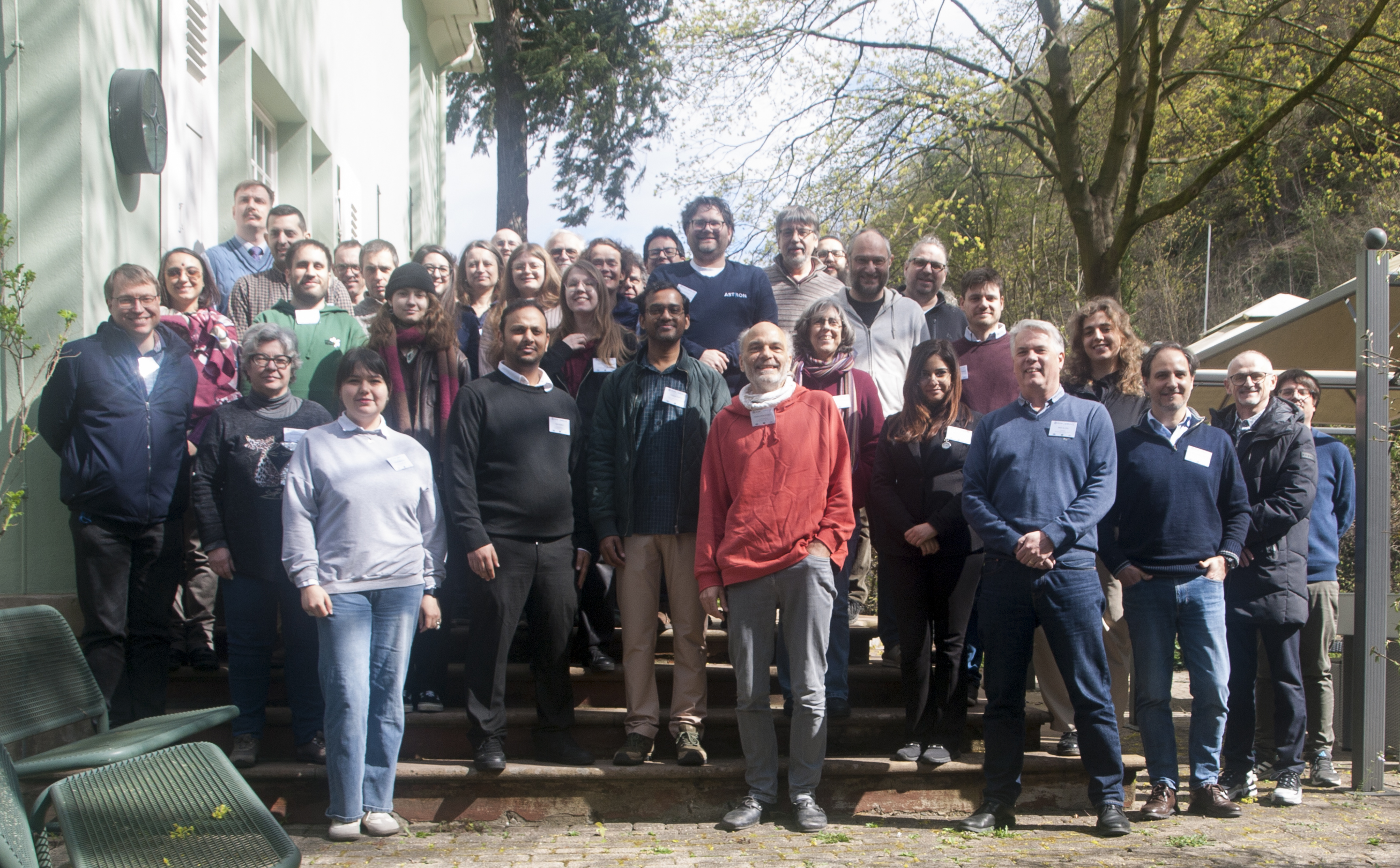
The goal of this forum is to bring together researchers and technicians, Research Infrastructures, data-intensive projects, astronomy data providers to exchange knowledge and experience related to the online publication of astronomical and astroparticle data and related services using the International Virtual Observatory Alliance (IVOA) standards to ensure their data is findable and usable with common, standard tools. This forum is the right place if you want to be FAIR in astronomy, or help others become FAIR.
The forum offers a space to:
discuss shared challenges in data publication;
present approaches, solutions, and lessons learned;
engage with peers and build connections across projects and infrastructures;
participate in practical, hands-on sessions on widely used VO data publication tools and technologies.
To accommodate both newcomers and experienced data providers, the programme will include:
Introduction to the Virtual Observatory (VO):
A dedicated session for participants new to the VO, covering its concepts, architecture, standards, and core tools.
HiPS (Hierarchical Progressive Surveys): Here you can learn how to create and publish hierarchical sky survey data.
DaCHS (Data Center Helper Suite): a full publication suite that lets you enter the VO without writing any code; if you are interested in getting help publishing your data, please contact gavo@ari.uni-heidelberg.de as you register.
EPNTAP: If you have solar or planetary data, publishing them through EPN-TAP makes it findable in the Virtual Observatory and through custom portals like VESPA. This workshop will teach you how to set up an EPN-TAP service. Advanced EPNTAP users can learn how to add datalink to an EpnCore table for solar and planetary data;
HAPI: here you can learn how to setup a HAPI service (time-series interface for heliophysics)
“How to Register Your Data” workshop: Whether or not your data service already is standards-compliant, you can and should register it; at the EDP forum, we will tell you how you can do that.
If you have experiences or requirements to share, you are most welcome to submit an abstract for either a show-and-tell lightning talk of 2 minutes or a longer, 15+5 minute presentation. However, we absolutely welcome observer-only participation as well.
There is no registration fee. We have limited funds available to help with travel for participants without institutional support, so please do not hesitate to get in touch with the Local Organising Committee.
Introduction to the VO - Sara Bertocco and Hendrik Heinl
Introduction to the VO - Sara Bertocco and Hendrik Heinl
Introduction to the VO - Sara Bertocco and Hendrik Heinl
Recent developments at the ESAC Science Data Centre (ESDC) significantly enhance how the scientific community accesses, explores, and exploits mission data. Two key innovations will be highlighted in this talk: the automatic HiPS generation pipeline for XMM‑Newton and the set of widgets deployed within a modernized infrastructure, to be integrated seamlessly within the different Science Archives. Together, these tools demonstrate the commitment to interoperability, reusability, and rapid application development, while strengthening alignment with Virtual Observatory (VO) standards.
The introduction of reusable pipelines and widgets eliminates the need to develop the same component several times for different missions, reducing both development time and maintenance efforts.
The automatic HiPS generation based on HipsGen enables continuous production and updating of sky maps such that high-level data products remain compatible with visualizations tools like Aladin Lite and ESASky and users have continued access to up-to-date XMM data through through these applications.
The ESDC Search Panel widget introduces a mission‑agnostic, reusable component for data discovery. Its design, based on the common TAP protocol, supports selectable filtered searches that eliminates the need for large forms or extensive scrolling. Users can select a column to filter, choose a comparator, and define a comparison value, or create groups: filters within a group combined using "OR”, while different groups are combined using "AND" clauses.
Additional metadata (column name, description, type, UCD...) are provided through the TAP to permit complex search requests. In addition, the ESDC ADQL Console widget provides an interactive TAP/ADQL query environment in which all TAP-exposed tables are visible such that users can create their own ADQL query including across different tables.
By embracing these standards and a common development workflow, ESDC enables faster delivery of high‑quality applications across missions. This not only strengthens long‑term maintainability for developers, but also empowers the scientific community with more responsive tools, richer data‑exploration capabilities, and a consistent experience across archives. Together, these advances mark a significant step forward in ensuring that ESA’s expanding data holdings remain accessible, discoverable, and scientifically impactful for years to come.
LOFAR is the world's largest low-frequency radio telescope. Since its official opening in 2010, it has produced data which has formed the basis for more than 1,000 refereed publications, spanning areas as diverse as extragalactic astrophysics, solar physics, and terrestrial lightning. The system is currently undergoing a major upgrade: over the coming years, it will become massively more capable and flexible, and will generate a dramatically larger volume of data. Around 50 PB of LOFAR data is currently publicly available through the LOFAR Long Term Archive. However, this data can be hard to discover, access, and use: the LTA predates much of the modern thinking around the FAIR principles. Further, while there are many data analysis tools available, they are inconsistent in terms of code quality, licensing, ease of use, and level of support. The LoFAIR project aims to change this. LoFAIR will upgrade the LTA to provide a fully-FAIR archive, and will roll-out a curated catalogue of analysis software for LOFAR data based on the Research Software Directory. Further, we will align this work with the broader community, notable the SKA Regional Centre Network, and will engage with the Radio Astronomy Interest Group in the IVOA. In this contribution I will discuss the context of the LOFAR data holdings, describe the current state of our software and data archive, and present our plans for the future.
Introduction to the VO - Sara Bertocco and Hendrik Heinl
Over the years, the AIP has developed significant expertise in long-term operation and the curation of astronomical data archives. This experience is a major reason why the AIP is now one of the partner data centers for the ESA Gaia mission. The institute publishes not only its own telescope observations but also data from various international missions in which the AIP is involved. The range of data is huge, spanning from digitized photographic plates to spectroscopic and photometric data, solar data, to pure cosmological simulation data. This diversity is made possible by Daiquiri, a web-based platform developed at the institute. It supports standardized protocols from the International Virtual Observatory Alliance (IVOA) for data access and is available as open-source under the Apache2 license. Daiquiri was specifically developed to enable data providers to easily publish tabular data and associated files. The framework supports the VO TAP access protocol for scripted access, a web SQL query form and VOTables upload, as well as download in FITS, Apache Parquet and VOTable file format, all of which are available straight away. Daiquiri also enables public and restricted data access, as well as user management and project documentation.
This talk introduces SVOCat, an application developed by the Spanish Virtual Observatory and specifically designed to simplify the process of publishing astronomical catalogues. SVOCat enables data providers to transform their data into both a user-friendly web interface and a standardised Virtual Observatory (VO) service, supporting ConeSearch and SSAP protocols. We will present the features of version 3.1, highlighting how it facilitates the integration of catalogues into the global VO infrastructure and providing examples of its implementation in real-world scenarios. Furthermore, to better support data centres and streamline deployment, a dedicated Docker image and setup are now provided, ensuring a more efficient and scalable installation process.
I will list possible contents extracted from VO that authors could reference or cite in the article. It includes acknowledgments, but also resources such as datasets (with persistent identifier like DOI) or services, which are used to generate an article. But it could also consist of giving a way to cite a query or a particular record.
Introduction to the VO - Sara Bertocco and Hendrik Heinl
Sky surveys in different electromagnetic wavebands and large cosmological simulations often result in significant astronomical data. The first challenge in this process is to have an efficient data management system where this huge amount of data can be stored and made available to the scientific community under the FAIR principle. Storage4PUNCH (S4P) is one of the major components of PUNCH that aims to address this challenge. It offers a platform that provides easy access to scientific data generated by particle-universe-nuclei-hadronic physics experiments, large simulations, and observations. Furthermore, analyzing such big data is required to unfold the secrets of the universe and its formation history, which is another real challenge. Data reduction and analysis tasks require powerful computing resources either to produce true sky brightness maps in a reasonable amount of time, post-process cosmological simulations, or to perform various scientific analyses. This is where the Compute4PUNCH (C4P) infrastructure comes in. The C4P infrastructure consists of high-performance, high-throughput computing machines offered under the PUNCH4NFDI project umbrella and is suitable for such use cases. In the first phase of PUNCH, a S4P access prototype and workflow example were developed to demonstrate C4P's efficiency in analyzing LoFAR and cosmological simulation data. To ensure reproducibility in research, these analysis pipelines and reference data are encapsulated in a workflow and made available as a digital research products. This talk will provide an overview of ongoing work in this area within PUNCH, as well as further advancements for seamless processing.
Bridging Domain-Specific Data Center and Cross-Domain Metadata Frameworks
Abstract The KASCADE Cosmic-Ray Data Centre (KCDC) is a domain-specific data provider for high-energy astroparticle physics. Established in 2013, it was among the first platforms to provide full open access to data from the KASCADE and KASCADE-Grande experiments. Over time, KCDC has expanded beyond experimental event data to include simulations, software, documentation, tutorials, and derived data products, reflecting the full digital research lifecycle typical for modern astroparticle physics. Operating KCDC over more than a decade required addressing a broad range of data curation challenges, including the management of heterogeneous digital objects, preservation of experiment-specific knowledge, and provision of sufficient contextual metadata to enable reuse beyond the original collaboration. These experiences have positioned KCDC as an active participant in the FAIR data community within fundamental physics. As a data provider, KCDC contributes to the PUNCH4NFDI (Particles, Universe, NuClei and Hadrons for Nationale Forschungsdaten Infrastruktur), which aims to federate data providers across astro-, astroparticle-, particle-, and nuclear-physics communities within a common Science Data Platform. Within this framework, we work on integrating KCDC digital resources into the PUNCH4NFDI infrastructure, addressing practical challenges related to metadata harmonisation, exposure of diverse data products, and alignment with infrastructure-level discovery and access services. In parallel, lessons learned from KCDC feed into the NAPMIX project, which develops a cross-domain metadata framework for nuclear, particle, and astroparticle physics. NAPMIX focuses on identifying shared metadata layers across disciplines and enabling FAIR data management at a cross-domain level while preserving necessary domain specificity. This contribution illustrates how lessons learned from operating a domain-specific astroparticle physics data centre support both infrastructure-level integration and cross-domain metadata development, highlighting transferable approaches to FAIR data publication.
The first alerts relayed by Rubin alert brokers are expected in February 2026. We will provide an update on the initial operations phase of Rubin Observatory and discuss how the Transient and Variable Science Collaboration is preparing, as well as how its microlensing subgroup plans to filter alerts.
The Virtual Observatory (VO) is often viewed by astronomers as a tool for convenient handling of large catalogues and imaging surveys, with cross-matching across electromagnetic and astroparticle domains as its key feature. Yet, although spectroscopy provides much of our understanding of celestial objects, spectral data management in the VO remains suboptimal and its full capabilities are underused. One of today’s main research drivers — high‑precision radial velocity analysis for exoplanet detection - still takes place largely outside the VO due to missing standards and suitable tools. Wearing several hats of researchers from different astrophysical fields, we will first envision the requirements for an ideal VO‑compatible spectral analysis environment. Then, putting on the hat of a spectra provider, we will discuss what can already be achieved on the VO spectra server side without developing new protocols, data formats, or server functionalities, showing that many scientific needs can be met with a little effort using the existing tools.