Choisissez le fuseau horaire
Le fuseau horaire de votre profil:
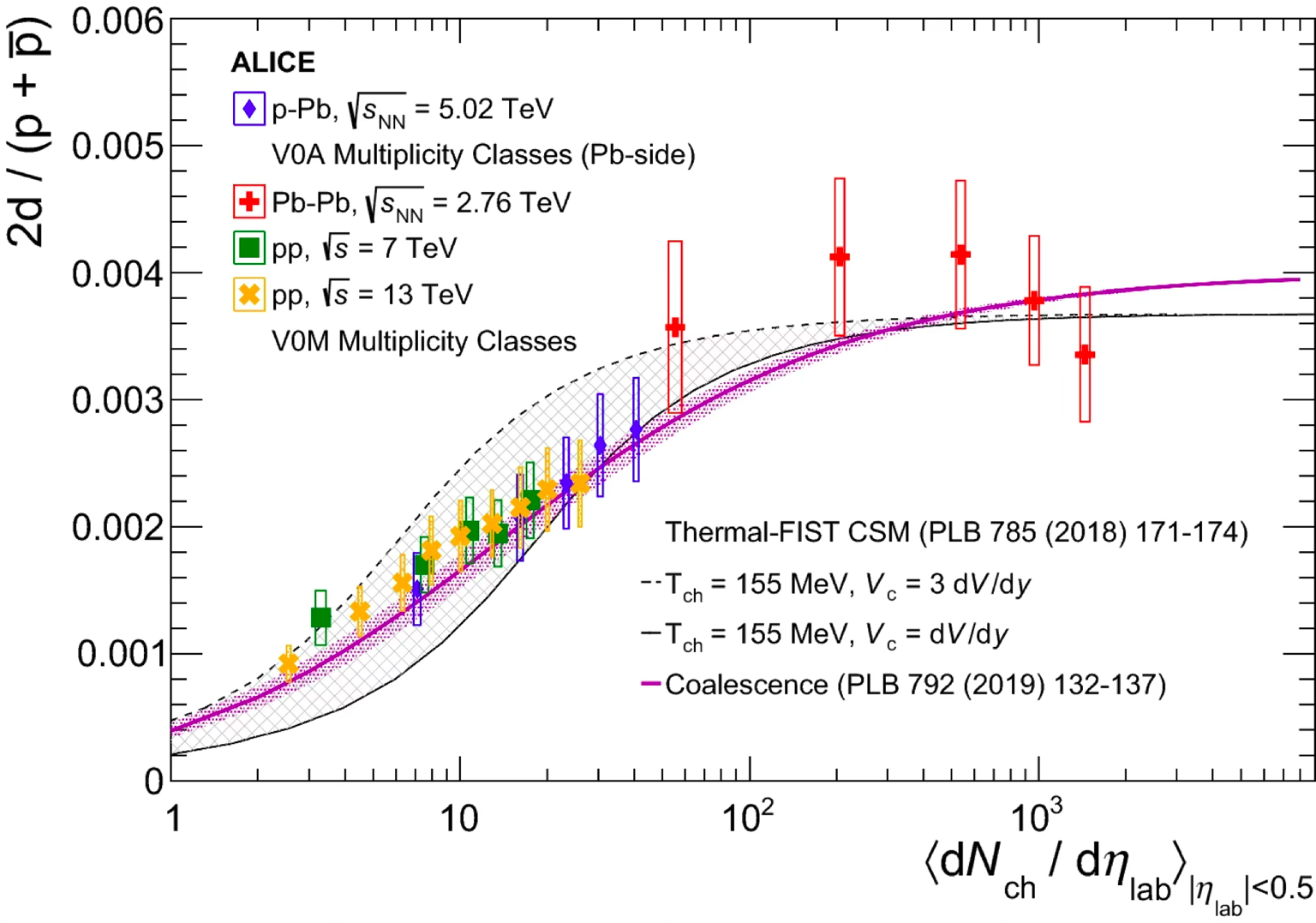
Light nuclei are produced abundantly at the LHC, even though their binding energies are small compared with the temperature for hadron production in ultra relativistic collisions. This “snowballs in hell” puzzle has two successful but conceptually different explanations.
In coalescence pictures, nuclei form in the final state when nucleons are close in phase space, with probabilities set through Wigner formalism in coalescence afterburners. In thermal models, nuclei are produced from an equilibrated system. Since both frameworks describe inclusive nuclei yields, the key question is which observables can access their microscopic dynamics.
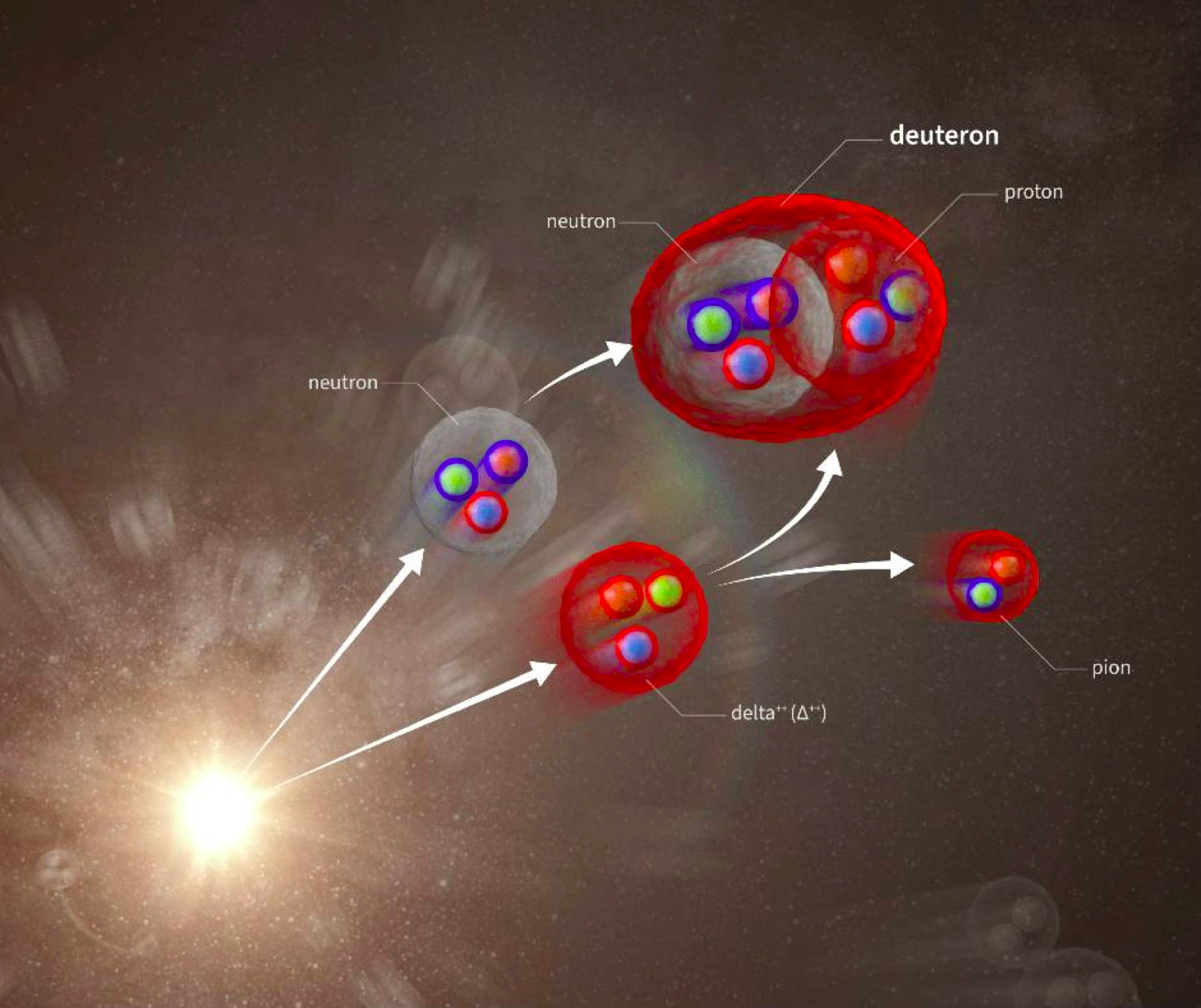
In this talk, I will review recent ALICE results and discuss two complementary approaches. First, proton and deuteron triggered balance functions probe baryon number correlations and help separate thermal production from coalescence. Second, motivated by recent pion–deuteron femtoscopy result by ALICE pointing to resonance driven production, I will discuss an inclusive study with the $\Lambda (1520)\rightarrow pK$ signal. I will also note that $\Lambda$ baryon decays provide complementary constraints, as shown by recent LHCb searches for antihelium in $\Lambda_b$ decays.