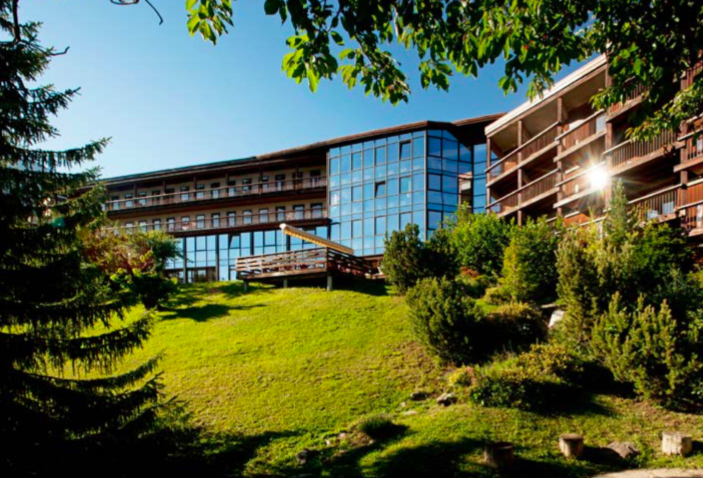
The organization of the PhyNuBE schools is one of the key initiatives of the GDR RESANET. These schools aim at educating physicists in the field of low-energy nuclear physics and promoting exchanges between them. The subject of our discipline deal with the study of the structure and dynamics of atomic nuclei, fundamental symmetries, fission, astrophysics, physics at the drip lines and societal applications, to quote a few.
Over the past decade, innovative experimental and theoretical methods have emerged. These new avenues require for both young and experienced scientists to constantly acquire new knowledge and to master new tools. The aim of this 4th school is to introduce them and train researchers and students in emerging concepts.
The following subjects, mostly here applied to nuclear physics, will be addressed:
- Machine learning and artificial intelligence in experiment and theory
- Bayesian methods to predict physics phenomena from observations and theories
- Quantum computing
- Quantum sensors
- Storage rings for spectroscopy and reactions
- Study of open nuclear quantum systems and synergy with other quantum objects
For the first three topics, lectures will be followed by 3-hour training sessions in order to favour the understanding and integration of the subjects. To initiate synergies, participants of the school are invited to submit a contribution that will be selected either as a talk or as a poster.
The event is supported by the GDR Resanet, EUROLABS and the Formation Permanente of the CNRS. Thus, partial support is expected to be available for participants. Personal of the CNRS are highly encouraged to apply as their fees could be covered by the Formation Permanente of the CNRS. The registration fee for non-supported participants covering lodging and all meals during the event, will be about 500 euros, to be paid onsite.
The number of participants will be limited to 60 participants.
Abstract submission and Registration dead line : 15th February 2025
The organizers:
Pauline Ascher, Diego Gruyer, Chloë Hebborn, Denis Lacroix, Antoine Lemasson, Olivier Sorlin (Chair)