Orateur
Description
Prototyping novel scintillation detectors and PET/SPECT scanners heavily relies on Monte Carlo simulations to inform hardware optimization and data-processing development. While optical photon simulations remain the gold standard for detector modeling and provide details on spatial, energy, and TOF resolution, they are extremely time-consuming because they track thousands of optical photons released in a single gamma-photon detection step by step. This is one of the main reasons why it is currently infeasible to go beyond a single detector array and simulate a full system. However, a PET scanner cannot be reduced to one isolated detector, since several scenarios require the full system geometry for realistic conditions and comprehensive insights.
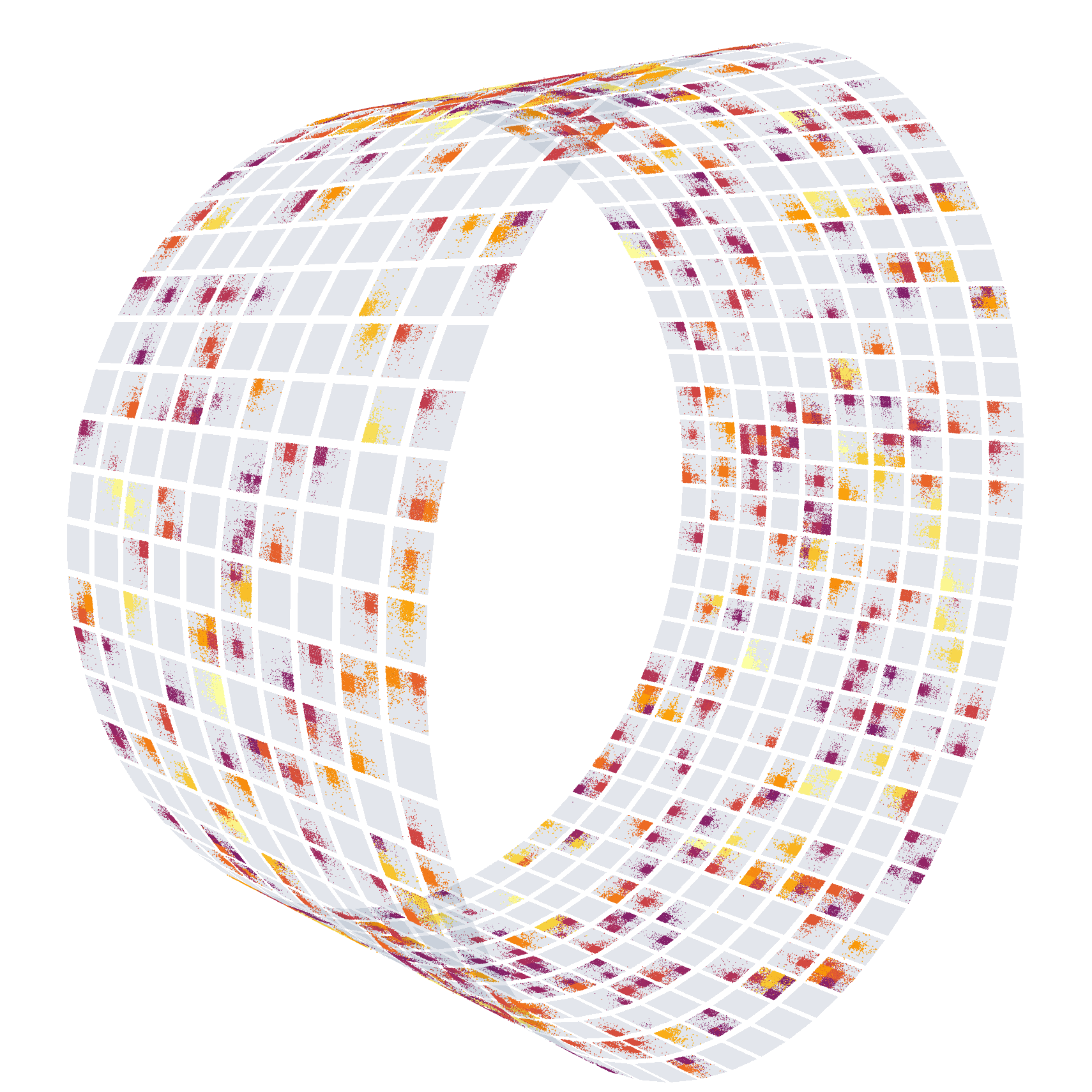
We developed a new actor that integrates into the established digitizer chain, allowing users to introduce their own generative (AI) models into GATE10 scanner simulations. The primary physics (processes involving gamma photons) relies on GATE, while the model itself manages the optical processes. The model’s output is flexible and can be defined by the user to match the desired experiment, without needing to reinstall GATE. We tried to keep the impact on simulation scripts as small as possible, so a normal scanner simulation script can be transformed into an optical scanner simulation by adding fewer than ten lines of code. At the user meeting, we will demonstrate the new simulation capabilities using an OptiGAN model of a 3x3 BGO detector array and show that the time needed for a full-system optical simulation (see Fig. 1) is reduced from days to minutes. Although the acceleration factor may depend on model size and other settings, our initial results show an approximately 126-fold reduction in simulation time for our setup.