About the School
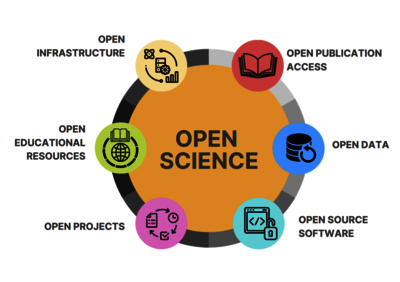
Open Science is the practice of making research outputs such as data, software, publications, hardware, and infrastructure openly available to everyone. It promotes transparency, collaboration, and reproducibility in research, while enabling broader access to scientific knowledge for both researchers and the public.
For the physics community, Open Science represents a major opportunity to improve the management and use of the large datasets produced at accelerator facilities across Europe, and to strengthen international collaboration.
A central aspect of this effort is the adoption of collaborative software development practices, which are essential for building reliable, maintainable, and shareable scientific workflows.
Developing common data workflows that can be shared among European physics laboratories would represent a major step forward toward Open Science. The data produced in these facilities should follow the FAIR principles (Findable, Accessible, Interoperable, and Reusable) to ensure long-term preservation and future usability by the scientific community.
The goal of this Advanced Training School is to introduce these principles and to provide hands-on experience with tools and methods that enable effective data management and collaborative software development in a research context.
Programme and Lecturers
The school will combine lectures with practical sessions covering modern tools and collaborative workflows:
-
Hands-on Data Challenge — Adrien Matta (LPC Caen, CNRS) and Jérémie Dudouet (IP2I Lyon, CNRS)
-
GitLab — P. Davis (LPC Caen)
-
Snakemake — Adrien Matta (LPC Caen)
-
Data Management — Quentin Fable (GANIL)
-
Reproducibility — C. Paxman (GANIL)
Participants will gain practical experience with software version control, workflow automation, and reproducible research environments — all key elements of collaborative development.
Venue and Activities
The school will take place at GANIL in Caen, France, from 2 to 6 February 2026.
An excursion is planned to visit the GANIL accelerator complex, where participants will have the opportunity to explore the facility and its experimental setups, offering a unique insight into the daily life of a nuclear physics research laboratory.
Participation
The school is open to PhD students, final year Master students, and early career postdoctoral researchers.
A total of 25 to 30 participants will be selected based on applications.
Travel and accommodation support will be provided through the EURO-LABS project.
link to project zero : https://gitlab.in2p3.fr/eurolabs-os-school/hands-on-2026/project-zero
Local Organizers
Q. Fable (GANIL), J. Dudouet (IP2I), A. Lemasson (GANIL), A. Matta (LPC Caen)
