Spring EPICS collaboration meeting 2026
Amphithéâtre Alain Aspect - 1G58
ENS Paris-Saclay (Ecole Normale Supérieure, Université Paris Saclay)
.png)
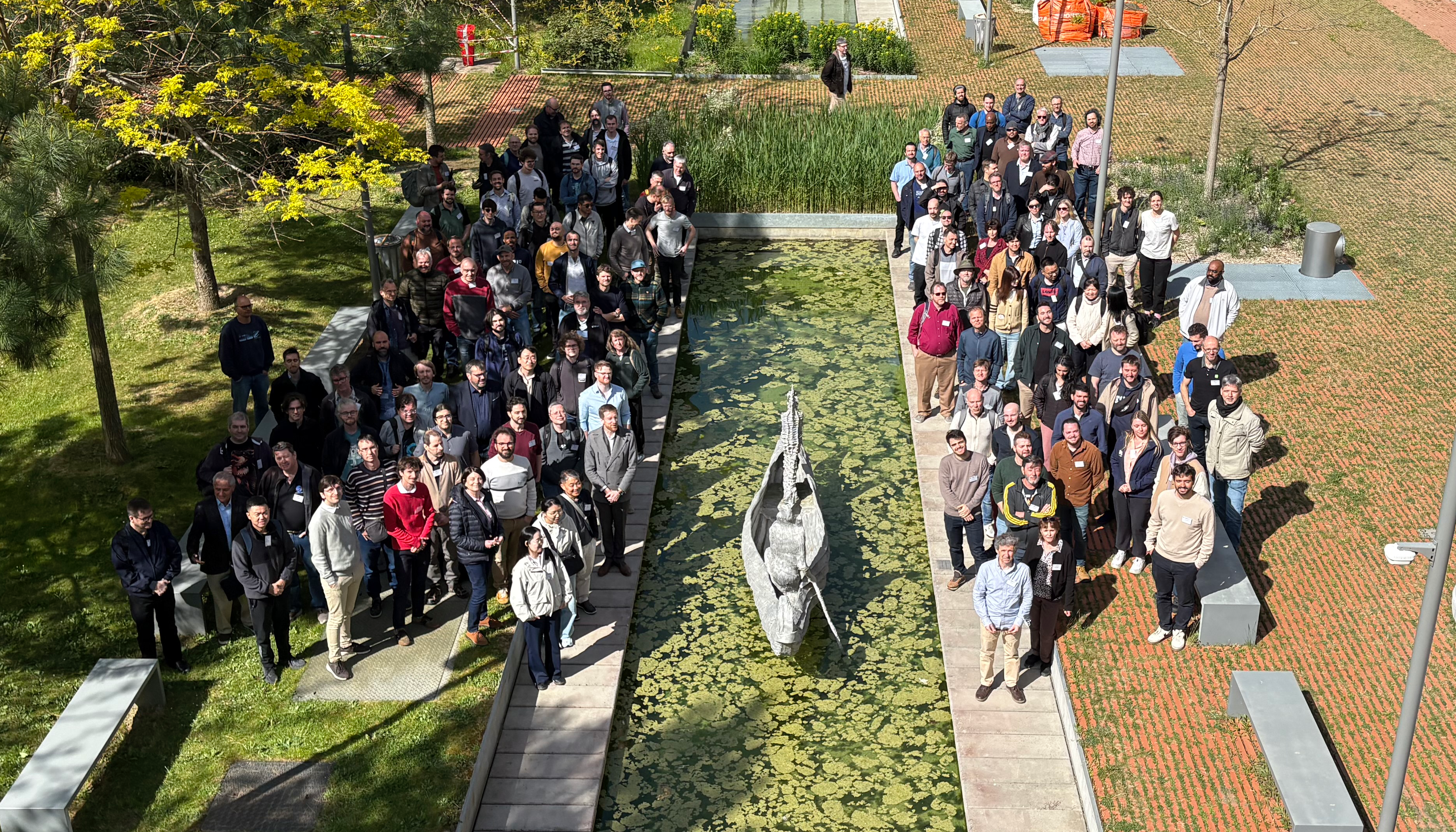
The Experimental Physics and Industrial Control System, EPICS, is a set of Open-Source software tools, libraries and applications developed collaboratively and used worldwide to create distributed soft real-time control systems for scientific instruments such as particle accelerators, telescopes, experiment beam lines and other large scientific experiments. The EPICS Collaboration Meetings provides an opportunity for developers and managers from the various EPICS sites to come together and discuss their work and inform future plans. Attendees can see what is being done at other laboratories, and review plans for new tools or enhancements to existing tools to maximize their effectiveness to the whole community and avoid duplication of effort.
The Spring 2026 EPICS Collaboration Meeting and related workshops will be held Monday April 20 to Friday April 24, 2026 at Paris Saclay University . The Collaboration Meeting uses three days: Monday - Wednesday, April 20-22, 2026. Workgroup meetings and training sessions will be held on Thursday and Friday morning, April 23-24, 2026.
A visit to some CEA Saclay installations is planned for Friday afternoon.
Thank you for joining us this spring in Paris, France!
Please refer to the "Timetable" for links to the presented material.
Venue:
ENS Paris-Saclay
4 avenue des Sciences
91 190 Gif-sur-Yvette
-
-
08:30
→
09:30
Check in Amphithéâtre Alain Aspect - 1G58
Amphithéâtre Alain Aspect - 1G58
ENS Paris-Saclay (Ecole Normale Supérieure, Université Paris Saclay)
4 Av. des Sciences, 91190 Gif-sur-YvetteFind your way onto the Paris Saclay campus, locate ENS, get your badge
Présidents de session: Alexis Gaget (CEA Saclay), Natacha Lomet (DRF IRFU DIS), Paul Lotrus (CEA Saclay Irfu), Sophie Durand (CEA Saclay Irfu) -
09:30
→
10:00
Welcome talks Amphithéâtre Alain Aspect - 1G58
Amphithéâtre Alain Aspect - 1G58
ENS Paris-Saclay (Ecole Normale Supérieure, Université Paris Saclay)
4 Av. des Sciences, 91190 Gif-sur-Yvette-
09:30
Welcome 20mOrateur: Pierre Manil (CEA Paris-Saclay)
-
09:50
Information point 10m
In this presentation, I will briefly introduce the host laboratory for this meeting and then provide an overview of the week's organization.
Orateur: paul lotrus (CEA Saclay Irfu)
-
09:30
-
10:00
→
11:00
EPICS Meeting Talks: Status Reports Amphithéâtre Alain Aspect - 1G58
Amphithéâtre Alain Aspect - 1G58
ENS Paris-Saclay (Ecole Normale Supérieure, Université Paris Saclay)
4 Av. des Sciences, 91190 Gif-sur-Yvette-
10:00
EPICS legacy at CEA Saclay 20m
This presentation will give an overview of the use of EPICS, its tools and hardware platforms in our laboratory for particle accelerator projects over the last 30 years. We joined the EPICS community in 1993 for the control system of the Tesla Test Facility at DESY, a collaborative project for which EPICS was being advised. Subsequently, our Institute was involved in 2 experiments at the Jefferson Laboratory, for which EPICS was also chosen.
For the Spiral2 project at Ganil EPICS was selected in 2007. In these different projects EPICS was running on a VME/vxWorks platform associated with ADAS acquisition boards.
Between 2014 and 2017, we used EPICS solutions based on VME and Linux and IOxOS boards essentially for test stands for the ESS and Saraf collaboration projects.
In 2017, we decided to migrate to MTCA.4, Linux associated with IOxOS boards for the new projects. This MTCA platform will be presented as well as our evolution in EPICS.Orateur: Francoise Gougnaud (CEA Saclay Irfu) -
10:20
The SPIRAL2 EPICS Control System 20m
Description of the SPIRAL2 Control System and perspective for the upcoming upgrades: DESIR, S3, NEWGAIN
Orateur: M. Christophe Haquin (GANIL/CEA) -
10:40
Upgrading an Operational EPICS Control System to EPICS 7 20m
The EPICS based control system at SNS has been in operation since 2006. After 20 years of running EPICS Version 3, we have embarked on the journey of upgrading to EPICS 7. This upgrade is necessary as support for EPICS 3 is discontinued and to take advantage of new features especially more advanced data handling capabilities. Most importantly, Secure EPICS will only be available for EPICS 7 systems and this is a critical piece to meet increasing cybersecurity mandates. However, having a large, mature operational EPICS control system in a complex machine operating over 5000 hours per year means changes must be implemented in phases with minimal disruption to operations and availability. This talk will discuss our strategy and progress towards upgrading to EPICS 7.
Orateur: Karen White (Oak Ridge National Laboratory)
-
10:00
-
11:00
→
11:25
EPICS Meeting Lightning Talks Amphithéâtre Alain Aspect - 1G58
Amphithéâtre Alain Aspect - 1G58
ENS Paris-Saclay (Ecole Normale Supérieure, Université Paris Saclay)
4 Av. des Sciences, 91190 Gif-sur-YvettePrésident de session: Alexis Gaget (CEA Paris-Saclay, IRFU)-
11:00
IFMIF-DONES control systems and testing platform 5m
IFMIF-DONES is a materials research facility on the European roadmap toward the commercialization of fusion energy, to be constructed near Granada in Spain. It will generate an intense, continuous flux of fusion-like neutrons to qualify materials for future fusion reactors. Its ambitious availability targets impose stringent reliability requirements on all components, particularly transversal and multi-contributor systems such as the control systems.
To address this, the central and local control system architectural and technological choices will be validated on a dedicated testing platform currently under development. Key aspects evaluated include the EPICS IOC deployment model (container-based) and the orchestration solution (currently assessing Ansible, Proxmox HA, Docker Swarm).
The aim is to provide all project contributors – across in kind, international, and local organisations – with a development kit to set up their own local development, test, and validation environment. To guarantee consistent and reproducible setups, an Ansible collection will deploy a generic containerized instance of each service.
This contribution reports on the design and current developing and testing progress of the Ansible collection for IFMIF-DONES, with a focus on the Phoebus services deployed so far.
Orateur: Lucas Maindive (IFMIF-DONES España) -
11:05
kiwi-scan: A Modular Scan Framework for Commissioning and Diagnostics in EPICS Environments 5m
kiwi-scan is a modular, YAML-configured Python framework for beamline and laboratory automation in EPICS environments. Developed at BESSY II, it has evolved from a tool for integration testing and operational diagnostics into a reusable system for commissioning and routine beamline operation.
Representative applications include integration testing, encoder error detection, undulator–monochromator synchronization, and device performance studies. The framework uses event-driven scan execution and separates configuration from execution via declarative YAML descriptions of actuators, monitors, triggers, and plugins used by scan engines.
Supported functionality includes triggering and metadata acquisition with waveform support, metadata monitoring, hookable trigger points, parallel multi-actuator scans, and custom scan engines for specialized motion and synchronization tasks. Additional features include monitoring and plotting utilities, monitor-driven actuator callbacks, and plugin hooks for higher-level control logic, such as closed-loop continuous-mode (CM) operation and device coordination.
This contribution presents the architecture of kiwi-scan, its YAML configuration model, and its CLI and Python interfaces, with examples demonstrating its adaptability to new devices and scan strategies.
Orateur: Andreas Balzer (Helmholtz-Zentrum Berlin (HZB)) -
11:10
python clients of the Archiver Appliance 5m
Overview of a collection of python libraries for interacting with the Archiver Appliance.
- For retrieval, via protobuf
- For bulk management changes with clear checking
Orateur: Sky Brewer (ESS) -
11:15
Design and implementation of CSNS-II accelerator control network management system 5m
As accelerators increase in scale and complexity, their control networks face challenges such as device proliferation, security management difficulties, and low maintenance efficiency. To address these issues, a control network management system for large-scale accelerators was designed and developed. This system implements three core functionalities: centralized management of control network IP addresses, automated collection of dynamic network information, and network access control. The system prevents IP conflicts through a centralized application and approval mechanism; enables real-time monitoring of device status and precise physical location identification based on switch operational data; and enhances control network access security through IP and port binding. The system is built on a Web architecture, with a front-end developed using the Vue.js framework and a back-end utilizing a hybrid technology stack of Node.js and Python, while MongoDB is employed for data storage.
Orateur: kangjia xue (Institute of High Energy Physics, Chinese Academy of Sciences) -
11:20
IOC Shell Parser 5m
Although the EPICS framework is used for many experimental physics facilities, monitoring the errors and warnings in IOC shell remains a challenge. Errors in the IOC shell are only kept track of in log files, which are rarely read by anyone. To address this issue, a project called IOC Shell Parser was developed, providing error detection and real-time EPICS monitoring. Designed to be used in large projects, it can handle up to a thousand IOCs with control for both errors and warnings. It works by parsing log files, with a default list of patterns of errors and warnings to search for, which are configurable. Errors are then returned in EPICS PVs that can be displayed in Phoebus, and monitored by an alarm server. It is made of a python client and a standard IOC to keep track of errors of each and every IOCs.
Orateur: Alain Sandoz
-
11:00
-
11:25
→
12:55
Lunch 1h 30m Hall Emmy Noether - 0V45 (ENS Paris-Saclay)
Hall Emmy Noether - 0V45
ENS Paris-Saclay
Lunch at ENS
-
12:55
→
14:15
EPICS Meeting Talks Amphithéâtre Alain Aspect - 1G58
Amphithéâtre Alain Aspect - 1G58
ENS Paris-Saclay (Ecole Normale Supérieure, Université Paris Saclay)
4 Av. des Sciences, 91190 Gif-sur-Yvette-
12:55
uTCA White Rabbit Timing and Trigger System for Distributed Deterministic Control 20m
Deterministic timing is a key enabler for the coordinated operation of accelerator and fusion facilities. This work presents WR-TTS, a White Rabbit timing and triggering system in uTCA form factor developed for distributed trigger and gate generation, event capture, and nanosecond timestamping. Based on a Xilinx Zynq UltraScale+ SoC and White Rabbit, the platform combines FPGA real-time processing with a Linux-based supervisory layer and provides up to nine configurable SMA I/O ports, 10 MHz and PPS outputs, dual SFP connectivity for White Rabbit and fast communications, and FMC/RTM expansion for subsystem-specific interfacing. The system can generate programmable pulse patterns, detect external events, and redistribute them through the network with deterministic latency, making it suitable for RF coordination, diagnostics, acquisition gating, and other time-critical functions.
WR-TTS is integrated with EPICS for configuration, readback, monitoring, and diagnostics within facility-wide control systems. A CSS Phoebus-based GUI allows operators to configure trigger type, period, duty cycle, delay, polarity, and pulse count, while near real-time feedback simplifies commissioning and operation. This approach also supports mixed environments in which time-aware devices act directly on distributed synchronized time, while non-time-aware equipment receives locally generated physical triggers and gates from the WR-TTS. In addition, the same White Rabbit infrastructure can be used for fast propagation of selected protection events, reducing cabling complexity and extending the role of the timing system beyond pure synchronization.
Orateur: Antonio Miguel Lopez Antequera (SAFRAN Electronics & Defense Spain S.L.U.) -
13:15
WAGO Interlock a Zero-Code Hardware Safety Interlock Configuration for EPICS Facilities 20m
Configuring hardware safety interlocks at synchrotron facilities has traditionally required PLC
expertise, custom ladder logic programming, and specialist support --- creating bottlenecks that
slow scientific operations. We present \textbf{WAGO Interlock}, an open-source tool jointly
developed by the Advanced Light Source (ALS, Lawrence Berkeley National Laboratory) and the
European Synchrotron Radiation Facility (ESRF), designed to eliminate that barrier entirely.The system leverages cost-effective WAGO 750-series modular hardware (\textasciitilde\$1,700/unit, versus \$4,000+ for comparable Allen-Bradley systems) paired with an intuitive web interface and
command-line tool. Scientists and operators can define complex interlock logic --- covering
thermocouples, analog/digital I/O, relays, and valves --- in minutes, without writing a single
line of code. Configuration is driven by a human-readable YAML file and a role-based permission
model (\texttt{Master}/\texttt{Admin}/\texttt{User}) that enforces controlled access across
multiple facilities and beamlines. A built-in change tracker, live signal monitoring, and
real-time plotting make the system audit-ready from day one.The hardware platform has been proven at scale at the ESRF, with over 400 WAGO units deployed
across all beamlines for more than 20 years, covering use cases including laser safety interlocks,
thermal protection of beamline optics, vacuum integrity, collision prevention on motorized stages,
and sample annealing protection.This contribution introduces the new EPICS IOC integration, which enables full interlock
management through Phoebus/CS-Studio OPI panels, a web browser interface, an interactive CLI,
and a Podman-containerized deployment --- fitting seamlessly into any standard EPICS control
system environment. Response times measured on the current implementation are below 20\,ns for
digital inputs and below 80\,ms for analog inputs, operating with multiple concurrent interlock
instances. The EPICS IOC, web application, and CLI are all available as open-source software
hosted jointly on the ESRF GitLab and ALS internal repositories.With 20 units (10 large, 10 small) scheduled for deployment across ALS beamlines and laboratories
before September 2026, WAGO Interlock is production-ready and open to collaboration and feature
contributions from the broader EPICS community.Orateur: Ernesto Paiser (Lawrence Berkeley National Laboratory) -
13:35
RTEMS 6 Migration and Driver Development for Motorola VME Boards 20m
RTEMS is a versatile, open-source real-time operating system (RTOS) widely utilized in embedded devices. At the Advanced Photon Source (APS), an initiative is underway to transition VME-based Input/Output Controllers (IOCs) from VxWorks to RTEMS. As RTEMS6.1 is released and the package libbsd becomes the standard network stack that supports NFSv4, gaps remain in Board Support Packages (BSPs) and essential drivers for several Motorola VME (mvme) boards such as mvme5100 and mvme3100. Additionally, the existing EPICS RTEMS initialization routine lacks the flexibility to configure network interfaces using the libbsd stack.
This presentation details a comprehensive compatibility survey of RTEMS 6 across mvme CPU boards currently in use at APS. We identify specific support gaps and describe our development of critical libbsd drivers, with a focus on the mvme3100. Furthermore, we discuss updates to RTEMS initialization routine in EPICS-base to better support the boot environment access and network interface configuration. Finally, we summarize the ongoing work to resolve critical issues essential for the successful transition and deployment of RTEMS6-based IOCs.
The work is supported by the U.S. Department of Energy, Office of Science, Office of Basic Energy Sciences, under Contract No. DE-AC02-06CH11357.
Orateur: Dr Ran Hong (Argonne National Laboratory) -
13:55
epics-rs: Exploring a Rust Implementation of EPICS for Simulation and Prototyping 20m
The Experimental Physics and Industrial Control System (EPICS) has served for more than three decades as a foundational framework for distributed control systems at accelerator facilities, synchrotron light sources, and large-scale scientific instruments. Its mature ecosystem and extensive set of support modules, developed through long-term community collaboration, have enabled reliable operation of complex experimental infrastructures worldwide.
This work presents epics-rs, an experimental implementation of core EPICS concepts written in the Rust programming language. The project investigates whether modern language features — including strong memory safety guarantees, expressive concurrency primitives, and an integrated package management system — can simplify the development and deployment of EPICS-based simulation environments while remaining interoperable with the existing ecosystem.
The current implementation provides Channel Access client and server functionality, an IOC runtime supporting a subset of commonly used record types, an asynchronous device interface inspired by the asyn framework, and components for motor control and detector-style data processing pipelines. The Channel Access protocol implementation is wire-compatible with standard EPICS tools and clients such as caget, camonitor, CSS, Phoebus, and PyDM, allowing epics-rs IOCs to integrate with existing control system environments without modification.
A primary motivation for this work is to support rapid prototyping and software-based simulation of complex device environments. Such simulations can be useful during early stages of system design, for development and testing of control logic, and for validating data processing pipelines before deployment in production systems based on the established C/C++ EPICS infrastructure.
The goal of epics-rs is not to replace existing EPICS implementations, but to explore alternative implementation approaches and provide an additional tool for experimentation and simulation workflows. We hope that the experience gained from this work may contribute to ongoing discussions within the EPICS community about future development directions.
Orateur: Sang Woo Kim (Pohang Accelerator Laboratory)
-
12:55
-
14:15
→
14:55
EPICS Meeting Lightning Talks Amphithéâtre Alain Aspect - 1G58
Amphithéâtre Alain Aspect - 1G58
ENS Paris-Saclay (Ecole Normale Supérieure, Université Paris Saclay)
4 Av. des Sciences, 91190 Gif-sur-Yvette-
14:15
Shared Ansible Roles for EPICS, Phoebus and Tools 5m
Based on experience collected at multiple EPICS sites and in the context of the EPICS Training-VM, we found Ansible a useful tool to install and manage the configuration of EPICS installations.
So we recently decided to start an effort to develop and share a set of Ansible roles to manage EPICS Base, EPICS Modules, Phoebus and the EPICS Services.This project is in a very early stage. There is nothing to see yet. We are asking for help: If you are interested and think you can contribute - or if you have a colleague like that - please get in touch.
Orateur: Ralph Lange (ITER Organization) -
14:20
EPICS AreaDetector Gaussian Fitting Plugin for Robust Beam Characterization and Alignment Support 5m
We present a new AreaDetector plugin that performs fast, robust 2D beam characterization using nonlinear least squares fitting, designed for beam diagnostics and focusing. The plugin fits flexible beam models (elliptical and rotated Gaussian, with optional Voigt-like extensions) directly on camera images and exposes key beam parameters such as centroid, widths, rotation, amplitude, and background, together with statistically meaningful uncertainties derived from covariance estimation. In addition, the framework is designed to be extended with a Kalman-filter–based prediction layer, which will provide warm-start initial conditions and fuse sequential measurements into a smooth beam-state estimate, improving robustness in continuous scans and mitigating noise and short-timescale jitter. The plugin already computes goodness-of-fit metrics and residual maps, enabling automated assessment of beam quality and the detection of non-Gaussian features and aberrations. Integrated as an AreaDetector component, it can run in (near) real time, stream results via EPICS, and serve as a “smart sensor” for higher-level alignment and optimization algorithms (e.g. gradient-based, simplex, or Bayesian optimization). This architecture turns raw camera images into reliable, uncertainty-aware beam descriptors that can be directly consumed by automated commissioning workflows and beamline control scripts, providing a practical path toward more stable, faster, and quantitatively transparent beam alignment and focus adjustment.
Orateur: Luca Porzio (Helmholtz-Zentrum Berlin) -
14:25
Enhancing EPICS Service Resilience with VRRP and Round-Robin DNS 5m
Ensuring high availability of EPICS network services is increasingly important as control systems scale. By combining VRRP to provide IP‑layer mobility with Round‑Robin DNS for lightweight distribution, it is possible to build resilient configurations that tolerate client-side and server-side failures.
These techniques are commonly used for services such as load balancing provided by HAProxy and can be applied directly to PVAGateway and other services, enabling seamless failover, reduced downtime during updates, and improved robustness without requiring changes to EPICS clients. This approach offers a practical method for enhancing service availability while maintaining operational simplicity.Orateur: Paul Ray (UKRI - STFC) -
14:30
A Python-Based Modular EPICS Collector for On-Demand PV Recording 5m
We present our efforts to develop a lightweight modular EPICS collector to record small- to medium-sized sets of PVs over a user-controlled period of time.
The goal is to provide an easy-to-extend Python package for recording PV data during experimental runs that covers basic requirements such as export-to-file, upload to data-management systems, and live-streaming of recorded data for real-time analysis or visualization.
The collector can operate locally on a user’s machine as a simple standalone data recorder and/or in a distributed client-server setup with multiple other collectors.
Its modular, distributable design with a single Python interface offers a dedicated data recording setup that is scalable yet simple-to-use in scenarios where full‑scale recording infrastructure is unavailable or otherwise impractical to use.
Orateur: Simeon Beinlich (Fritz-Haber-Institut der Max-Planck-Gesellschaft, Berlin, Germany) -
14:35
AutOlog 5m
Autolog is a Python package which allows automatic creation of logs in a Phoebus-Olog server, triggered by EPICS Process Variables (PV). This application will be integrated as a daemon and will continuously monitor the Channel Access network using a loop with a user-defined delay.
The user defines in a configuration file (toml format):
- connection information to the Olog API,
- description of the log,
- context information which can include PV values,
- conditions to be fulfilled before creating a log,
- PV which triggers the log creation (on specific values or on change in PV value).For example, in the context of an accelerator of particles, this application could create logs when:
- a new destination is reached by the beam
- the beam is shut by the Machine Protection System
- a result is obtained after processing certain measurement data, such as the beam energy at a given location.Finally, using the Phoebus client or the Olog web server, one can easily have an idea of the accelerator activities.
More developments will be undertaken to retrieve statistics on the log creation.
Orateur: Antoine Choquet (CEA Paris-Saclay) -
14:40
Exploring PVAccess with Rust 5m
Implementing the PVAccess protocol codec in Rust and introducing observability tools alongside standard PVAccess utilities as a working prototype. The Rust-based implementation leverages the language's ownership model and borrow checker to provide compile-time guarantees of memory and thread safety. A PVAccess capture tool called spvirit-scry is demonstrated, featuring a terminal user interface for monitoring all PVAccess interactions and packets in real time.
Orateur: Aqeel AlShafei -
14:45
Evaluating EPICS as a Replacement for IBA’s Industrial SCADA Layer 5m
IBA (Ion Beam Applications) designs particle accelerator systems for proton therapy, radio-pharmacy, and industrial applications. Our machines embed large-scale distributed control systems with stringent requirements on safety, cybersecurity, auditability, availability, maintainability, and role-based access control.
Increasing concerns around vendor dependency, total cost of ownership, and long-term sustainability have led us to initiate a structured, weighted evaluation of alternative SCADA architectures. EPICS emerged as a strong candidate for its open-source model, OPC-UA/pvAccess PLC integration, and ecosystem maturity. A central open question remains the HMI layer: desktop-based Phoebus versus emerging web-based frameworks.
We attend this meeting to exchange with sites that have deployed EPICS in regulated, industrial contexts — and to open a dialogue toward potential community contribution.Orateurs: Marco Pitruzzella, xavier wilputte -
14:50
GengiScan 5m
GengiScan (GENius GenerIc SCAN) is a program meant to run "scanning procedures" (or "scan"), i.e. series of operations that involves moving "positioners" (like, motors, magnets, etc) through a specific sequence of positions combinations.
The end goal is to acquire data automatically over the entire procedures, which would have been extremely painful (if not downright impossible) to do manually.
This lightning talk will present GengiScan in more details.
Orateur: Stephane Tzvetkov (CEA Paris Saclay)
-
14:15
-
14:55
→
15:25
Tea break 30m Hall Emmy Noether - 0V45 (ENS Paris-Saclay)
Hall Emmy Noether - 0V45
ENS Paris-Saclay
-
15:25
→
17:25
EPICS Meeting Talks Amphithéâtre Alain Aspect - 1G58
Amphithéâtre Alain Aspect - 1G58
ENS Paris-Saclay (Ecole Normale Supérieure, Université Paris Saclay)
4 Av. des Sciences, 91190 Gif-sur-Yvette-
15:25
Why EPNix? 20m
EPNix is a project that enables you to build, package, deploy IOCs and EPICS-related software by using the Nix package manager
With all these already existing deployment and packaging tools, why was EPNix created?
We will discuss the origin story of this EPICS packaging and deployment tool:
- how and why it was created,
- how we are using it,
- and its impact on human resources
Orateur: M. Rémi Nicole (CEA Paris-Saclay) -
15:45
EPICS Diode – Gearing Up for Production Use 20m
To support ITER’s remote participation plans while honoring cybersecurity requirements, we are developing the "EPICS Diode", mirroring EPICS PVs through hardware devices allowing strictly one-directional network traffic.
We present the results of performance and qualification testing done in 2025, including a hardware network diode in the loop. The software has been made publicly available on GitHub.Orateur: Denis Stepanov (ITER Organization) -
16:05
Caput Log integration with pvinfo 20m
Caputlog is a runtime logging tool that streams events through Logstash and stores them in Elasticsearch, while PVInfo provides a React-based visualization layer for PV metadata. This project integrates Caputlog logs with PVInfo to deliver context-rich diagnostics, improved traceability, and actionable analytics. We engineered a modular data pipeline that ingests caput events from Caputlog, normalizes and indexes them in Elasticsearch, and synchronizes PV metadata from PVInfo to enable cross-referencing of events with PV state and configuration. The front-end PVInfo UI surfaces real-time and historical views that correlate caput activity with PV context, supporting faster root-cause analysis, reproducibility of incidents, and enhanced operator training.
Orateur: Conor Schofield (LBNL) -
16:25
Dynamically-generated PVs and HMIs 20m
One of the capabilities of CS-Studio / Phoebus is to load HMIs from a web-server. It is shown how this capability can be used to dynamically-generate HMIs and embedded display elements. This may be used to customize HMIs for users.
By reacting to search broadcasts, PVs may also be dynamically-generated on a per user (or other) basis. The methods that can be used to achieve this are discussed. The application of dynamically-generated PVs to integrate a simple model into the control system is demonstrated.
Orateur: Ivan Finch (STFC / ISIS) -
16:45
Phoebus eco system update 20m
This talk is on latest (~1 year) updates in the Phoebus applications and middleware services, and a brief overview of work in progress.
Orateur: Georg Weiss (European Spallation Source) -
17:05
SSH Monitor 20m
SSH Monitor is a special EPICS IOC which enables you to supervise any target machine through SSH commands (i.e. shell instructions executed through SSH connection).
In fact, SSH Monitor is made in such a way that it allows you to monitor absolutely any data, as long as you can come up with a shell instruction that can retrieve that data.
This tool can be very handy for:
- People working both on EPICS stuff and monitoring stuff;
- People with some sysadmin skills (not absolutely needed, but will definitely help);
- People working on “exotic” and/or “legacy” machines, desperate for monitoring solutions;
- People who wants to leverage an existing EPICS infrastructure for monitoring (e.g. using a pre-existing EPICS alarm system for your monitoring PVs, or using a pre-existing EPICS archive system to track your monitoring PVs over time).
This talk will present SSH Monitor in more details.
Orateur: Stephane Tzvetkov (CEA Paris Saclay)
-
15:25
-
17:30
→
20:30
Apéro (Welcome drink) Hall Emmy Nother - 0V45 (ENS Paris-Saclay)
Hall Emmy Nother - 0V45
ENS Paris-Saclay
-
08:30
→
09:30
-
-
09:00
→
10:20
EPICS Meeting Talks Amphithéâtre Alain Aspect - 1G58
Amphithéâtre Alain Aspect - 1G58
ENS Paris-Saclay (Ecole Normale Supérieure, Université Paris Saclay)
4 Av. des Sciences, 91190 Gif-sur-Yvette-
09:00
TITAN accelerator status report 20m
At the CEA site in Saclay, an accelerator named TITAN is under construction. It is an evolution of the IPHI accelerator, completely renovated for industrial use. Many systems are being developed in-house, including the information system for this project, which houses the control and command systems. This talk presents the project and the status report.
Orateur: Yannick Mariette (CEA Paris-Saclay) -
09:20
Update on EPICS deployment for PIP-II at Fermilab 20m
Fermilab is constructing a new 800 MeV/c^2 superconducting linac, called PIP-II, to increase beam power of the complex to a MW scale so as to provide a high neutrino flux to LBNF/DUNE. With the new accelerator is a new control system, based on EPICS. As PIP-II will ultimately feed into the existing accelerator chain, so will the new control system and so work seamlessly with the legacy control system.
To simplify onboarding of non-EPICS developers, we have established a github based CI/CD pipeline and templates for rapid development and robust infrastructure. An update on this process, a description of our services, and upcoming tests of the full-stack deployment at 3 teststands will be discussed. Lastly, we will describe our planned usage of secure PVA at these teststands.
Orateur: PIERRICK HANLET (Fermi National Accelerator Laboratory) -
09:40
Timing, MPS and control of the beam operation at SARAF 20m
The CEA Paris-Saclay Irfu is responsible for most of the EPICS control system for the Saraf Linac accelerator. This scope includes the control and the tuning of the beam, the machine protection system (MPS) and the timing system (TMG).
The machine protection system prevents any damage in the accelerator by shutting down the beam in case of detection of risky incidents like interceptive diagnostics in the beam, vacuum or cooling defects. So far, the system has been used successfully up to the MEBT. It will be tested soon for the super conducting Linac consisting of 4 cryomodules and 27 cavities. It relies on three sets: the MRF timing system that is the messenger of the “shut beam” messages coming from any devices, IOxOS MTCA boards with custom FPGA developments that monitor the Section Beam Current Transmission (SBCT) along the accelerator and a Beam Destination Master (BDM) that manages the beam destination required. This Destination Master is based on a master PLC. It permanently monitors Siemens PLCs that are in charge of the “slow” detection for fields such as vacuum, cryogenic and water cooling system.
We have developed a high-level application that can activate a set of subsystems to prepare the accelerator for the desired configuration. This application, called Beam Operation Mode (BOM), transmits and controls the operator requests of beam mode and destination to a set of subsystems. The BDM to check that conditions are good according to the destination. The SBCT must be configured for the desired destinations. The Cavity Phasing system verifies that the cavities are properly conditioned. The TMG network must be monitored and operational. The Max Pulse Width (MPW) application limits the beam power by restricting the pulse width, according to the inserted devices.
Orateur: Alexis Gaget (CEA Saclay DRF/IRFU) -
10:00
Managing IOC deployments at scale at ESS 20m
From humble beginnings of a hand-maintained list and a combination of ssh + screen to today, the European Spallation source currently has over 3,400 active IOCs which serve over 11,000,000 PVs. We will describe how we manage configuration for our systems emphasizing traceability, reproducibility, and quality control. We will also show how this allows us to monitor various aspects of our system including host and IOC logs, pv and archival status all from a centralised location. Finally, we will show how we are able to acheive fast updates to production systems as required to address the infamous "2am problem" or even worse, the "who deleted my control system" problem.
Orateur: Simon Rose (European Spallation Source ERIC)
-
09:00
-
10:20
→
10:50
Coffee break 30m Hall Emmy Noether - 0V45 (ENS Paris-Saclay)
Hall Emmy Noether - 0V45
ENS Paris-Saclay
-
10:50
→
11:20
EPICS Meeting Lightning Talks Amphithéâtre Alain Aspect - 1G58
Amphithéâtre Alain Aspect - 1G58
ENS Paris-Saclay (Ecole Normale Supérieure, Université Paris Saclay)
4 Av. des Sciences, 91190 Gif-sur-Yvette-
10:50
OPC UA Device Support – Update 5m
A collaboration (ITER/HZB-BESSY/ESS/PSI) maintains and develops a Device Support module for integration using the OPC UA industrial SCADA protocol. Goals, status and roadmap will be presented.
Orateurs: Ralph Lange (ITER Organization), Dirk Zimoch (Paul Scherrer Institut) -
10:55
A Versatile Framework for Automated Attitude Tuning at Light Source Facilities 5m
Attitude tuning—encompassing tasks such as beam focusing and sample alignment—is a critical yet time-consuming preparation step in synchrotron radiation experiments. This paper presents a Mamba-based software framework designed to automate and streamline attitude tuning at light source facilities such as HEPS and BSRF. The framework treats attitude tuning as a numerical optimization problem, integrating flexible input/output interfaces, diverse evaluation functions, and a variety of optimization algorithms, including support for machine learning and AI-based methods. It features both command-line and graphical user interfaces, enabling human-in-the-loop control when needed. Three real-world applications demonstrate its versatility: the tuning of a polycapillary lens, an X-ray emission spectrometer, and an X-ray Raman scattering spectrometer.
Orateur: Dr Pengcheng Li (IHEP) -
11:00
Preparing EPICS Services for Operational Use at Fermilab 5m
As part of PIP-II, ensuring that EPICS services can operate reliably during commissioning and long-term operation requires more than functional correctness. Operational deployments require reproducible builds, well-defined configurations, observability, security practices, recovery procedures, performance and scalability considerations, clear operational ownership, and operator/user acceptance. These practices form a lightweight operational-readiness framework that helps verify that services are ready for commissioning and sustained operation, providing confidence in the reliability and maintainability of EPICS deployments as the control system evolves.
Orateur: Mariana González Velarde (Fermilab) -
11:05
Embedded Linux EPICS IOC on a Xilinx UltraScale+ ×ZCU102 for a Microresearch Finland open Event Receiver 5m
The demand for deterministic, low-latency timing control at Los Alamos Neutron Science Center (LANSCE) has driven the integration of Event Receivers (EVR) with embedded Linux environments. We present an open-source Field Programmable Gate Array System on Chip (FPGA SoC) platform built with Yocto for the Xilinx ZCU102 UltraScale+ MPSoC. The MPSoC hosts an embedded Linux kernel and the EPICS input/output controller (IOC) framework. LANSCE development uses the Microresearch Finland (MRF) open-source EVR, which handles the deterministic tasks in the FPGA, and the mrfioc2, a register-level abstraction for open EVR. To meet LANSCE specific timing requirements, we are integrating an existing IOC that operates with MRF's EVR-230. The MPSoC will handle timing beam data and move pulser widths and delays to the appropriate registers within 3mS. With EPICS channel access over Ethernet, this platform will demonstrate interrupt handling in an embedded Linux environment. The reproducible Yocto builds and modular kernel module development will facilitate ongoing integration and customization of the timing infrastructure to LANSCE's evolving needs.
LA-UR-26-22138
Orateur: Sarah Dolan -
11:10
Trace: A Live and Archived Data Plotting Tool for PyDM 5m
Trace is an open-source plotting tool developed at SLAC National Accelerator Laboratory for visualizing both live and archived EPICS Process Variable data within the PyDM framework. Built on PyDM, PyQt, and PyQtGraph, Trace allows users to configure and display PV data across multiple axes with intuitive per-curve and per-axis controls, making it a practical tool for controls engineers, physicists, and operators alike.
Originally developed as the PyDM Archive Viewer, Trace has undergone a full redesign — both in user experience and architecture — taking inspiration from SLAC's Striptool to provide a cleaner, more modern interface. The result is a single tool capable of replacing separate live and archive plotting workflows. Trace also supports formula curves, allowing users to define mathematical expressions that treat existing curves as variables — for example, computing the mean across multiple PVs.
Trace is publicly available under SLAC's GitHub organization and is actively maintained. We are seeking feedback, collaboration, and adoption from the wider EPICS community to help guide its development and make it a robust tool beyond SLAC's walls.
Orateur: Zachary Domke (Stanford University) -
11:15
PVAccess for LabVIEW update 5m
An update on the status of bringing PVAccess communications to the LabVIEW ecosystem.
Orateur: Ross Titmarsh (STFC)
-
10:50
-
11:20
→
12:20
EPICS Meeting Talks Amphithéâtre Alain Aspect - 1G58
Amphithéâtre Alain Aspect - 1G58
ENS Paris-Saclay (Ecole Normale Supérieure, Université Paris Saclay)
4 Av. des Sciences, 91190 Gif-sur-Yvette-
11:20
Development of virtual beamline technology for advanced light sources: simulation and application of key components 20m
This study develops a virtual beamline technology for advanced light sources, with a focus on simulating the fundamental operational functions of critical devices including motors, double-crystal monochromators (DCM), fluorescent screens (FS), X-ray detectors, and X-ray beam position monitors (XBPM). By establishing parametric models, the simulation of device actions is achieved. It supports users in setting the displacement of motors, adjusting the Bragg angle of the DCM, and configuring the parameters of the slit aperture, and generates the corresponding state feedback signals of the devices.An interactive visualization interface is designed. Based on the state feedback signals of the devices, it generates the spot images on the fluorescent screen and synchronously displays the position trajectory of the beam measured by the XBPM, providing a visual reference for the beam tuning process. Through preliminary beam tuning simulations, the platform enables standardized operational workflows (e.g., energy selection) and optimizes parameter configuration sequences, effectively reducing trial-and-error adjustments during physical commissioning. The lightweight simulation framework proposed in this work offers a scalable and practical reference for advancing virtual commissioning technologies in synchrotron radiation facilities and other large-scale scientific installations.
Orateur: Mlle Miao Zhang (Institute of High Energy Physics) -
11:40
The Control of X-ray Deformable Mirrors 20m
In this presentation, we discuss the control of X-ray deformable (bimorph) mirrors using a high-voltage power supply.
We discuss the issues we had with our original controller and how we solved them using a new power supply.
We developed an asynPortDriver to control the new device. We discuss some of the device's features and the robust communication we have achieved and the effect of this on mirror commissioning.Orateur: Andy Foster (Observatory sciences) -
12:00
Daedalus: A WebUI for EPICS 20m
For decades, Diamond Light Source (DLS) and other facilities have been reliant on GUI packages that were first developed in the 90s and 2000s (e.g. edm, medm). CS-Studio was an attempt to move away from this, but wasn't very popular at DLS because of its sluggish performance and dependencies on Eclipse RCP and SWT.
At DLS for our Diamond II upgrade, we are looking to modernise our whole software suite to replace outdated tools. Gone are the days of monolithic code bases of our GDA, and using tools such as iocxmlbuilder. As part of this upgrade, we have been developing "epics-containers" to allow us to take advantage of cloud computing infrastructure and all the benefits it provides. We also saw an opportunity to leverage this infrastructure to host screens in the Kubernetes cluster and render them in a web app. This includes using our IOC configuration files to automate screen generation/validation.
We decided as a basis of the screens to use Phoebus, and Python to automate process the screen generation and validation. We have also created a phoebus-equivalent web app, known as Daedalus, to render such screens. This was built using React and typescript.
As a result of these efforts, we have successfully deployed a set of screens on our I19 and VISR beamlines, and can access them through our web app in a browserOrateur: Oliver Copping (Diamond Light Source)
-
11:20
-
12:20
→
13:30
Lunch 1h 10m Hall Emmy Noether - 0V45 (ENS Paris-Saclay)
Hall Emmy Noether - 0V45
ENS Paris-Saclay
-
13:30
→
14:30
EPICS Meeting Talks Amphithéâtre Alain Aspect - 1G58
Amphithéâtre Alain Aspect - 1G58
ENS Paris-Saclay (Ecole Normale Supérieure, Université Paris Saclay)
4 Av. des Sciences, 91190 Gif-sur-Yvette-
13:30
EPICS Archiver Appliance version 1 to the future. 20m
An overview of changes to the EPICS Archiver Appliance since version 1.1.0. Highlights on less well known features of the Archiver Appliance. Outline on how to use the more recent changes.
Orateur: Sky Brewer (ESS) -
13:50
Managing IOCs with IOCM 20m
Large EPICS installations often operate hundreds of soft IOCs distributed across multiple hosts. Managing these IOCs consistently—covering application creation, startup and shutdown, monitoring, validation, and upgrades—can become increasingly complex and error-prone as systems grow and standards evolve. To address these challenges at the Spallation Neutron Source, a new tool called IOCM has been developed.
IOCM is a command-line tool and supporting service for managing the full lifecycle of soft IOCs. It provides a unified interface for common operational tasks such as listing IOC status, starting and stopping IOCs across hosts, connecting to IOC consoles, validating applications against site standards, and locating IOCs by PV name. IOCM also supports standardized IOC application creation, including EPICS support module selection and configuration, with built-in checks to promote consistency and simplify long-term maintenance.
The tool integrates with procServ and systemd to enable reliable, reboot-safe IOC operation, while leveraging IOC statistics and filesystem conventions to provide both fleet-level visibility and detailed per-IOC diagnostics. IOCM has been deployed in production at SNS and is currently used to manage several hundred soft IOCs.
This presentation describes the motivation, architecture, and design of IOCM, demonstrates representative workflows, and discusses operational experience, including the use of IOCM to support upgrades to EPICS 7.
Orateur: Steven Webb (ORNL/SNS) -
14:10
Remote integration and commissioning of an EPICS-controlled accelerator 20m
Due to the difficult geopoltical context, travelling to the site of the SARAF accelerator is no longer possible. Thus, CEA/Irfu, in collaboration with SNRC, has taken a variety of measures to enable the remote integration and commissiong of the EPICS control system. The notable measures are the enhanced testing of software and firmware deliveries; the construction of a test bench dedicated to the Machine Protection System; the daily remote control sessions to integrate new control bricks or to support accelerator operation; and the training of SNRC teams to EPICS technologies, at Saclay in France. All these measures keep the project moving forward in an efficient and risk-free way, though we still need to find solutions for the next stages of the commissioning.
Orateur: Gabriel Desmarchelier
-
13:30
-
14:30
→
15:00
EPICS Meeting Lightning Talks Amphithéâtre Alain Aspect - 1G58
Amphithéâtre Alain Aspect - 1G58
ENS Paris-Saclay (Ecole Normale Supérieure, Université Paris Saclay)
4 Av. des Sciences, 91190 Gif-sur-Yvette-
14:30
PVTUI - Terminal User Interfaces for EPICS 5m
Many developers, in the EPICS community and otherwise, spend the majority of their time within a terminal environment, utilizing command-line tools and text-based editors. However, interacting with EPICS Process Variables (PVs) during development and testing often requires switching to comparatively heavy graphical display managers. This talk introduces PVTUI, a C++ library designed to bridge this gap by enabling the creation of lightweight, EPICS-aware terminal user interfaces (TUIs).
Built upon the FTXUI and EPICS pvAccessCPP libraries, PVTUI provides a set of interactive text-based widgets. These include input boxes, dropdown menus, and buttons that mimic the styling of classic EPICS display managers. The library provides a type-safe framework for monitoring and controlling PVs, supporting both Channel Access and pvAccess protocols.
In addition to the core library, the PVTUI repository includes several ready-to-use applications for common EPICS records, such as motor, asyn, transform, calcout, and sequence. It also features a strip chart application to monitor and plot live PV values directly in the terminal. As a text-based tool, PVTUI applications are uniquely suited for use over SSH connections, providing a responsive experience without the overhead of display server forwarding.
Orateur: Nick Marks (Argonne National Laboratory) -
14:35
EPICS (RTEMS/Linux) IOC with Web-Server for configuration 5m
I have often been asked by our IOC users whether it would be possible to configure and maintain the IOC via a web interface.
Just like they are used to doing with their internet routers (in Germany, fritz!box). This topic was raised at the last Codeathon/Documentathon at Diamond. I will briefly present what has been done so far and give an outlook on further steps.Orateur: Heinz Junkes (Fritz Haber Institut) -
14:40
Integration of non digital devices using modbus 5m
Retrofitting analog hardware with digital interfaces is a efficient and budget-friendly way to modernize setup in an laboratory environment. For instance, manual linear axes can be seamlessly upgraded using a intergrated stepper motor or simple pumps can gain digital control via inexpensive DAC converters. These electronics bridge the gap between legacy mechanics and EPICS control without requiring expensive replacements.
I will show how easy it is, to control this electronic using modbus on two or three examples.Orateur: Falk Rosenhahn (Fritz Haber Institute of the Max Planck Society) -
14:45
Implementing Closed-Loop EPICS EPID Control on CompactRIO for the IPF Water Skid at LANSCE 5m
Abstract.
As part of the Isotope Production Facility (IPF) water skid plant controls upgrade at the Los Alamos Neutron Science Center (LANSCE), we are migrating from an Allen-Bradley ControlLogix (Logix 5000) PLC (RSLogix 5000/Studio 5000) to NI (Emerson) CompactRIO (cRIO-9048)–based Experimental Physics and Industrial Control System (EPICS) input/output controllers (IOCs) using our Industrial I/O (IIO) framework. This project is the first deployment of EPICS extended PID (EPID) modules for closed-loop Proportional–Integral–Derivative (PID) control on this system at LANSCE. While the legacy PLC implemented PID, closed-loop PID had not previously been implemented on cRIOs using EPICS records at LANSCE; therefore, we are integrating EPID record support from the EPICS std module to provide loop control within the new cRIO/IOC architecture. Commissioning is underway, with validation focused on parity with the legacy PLC. In addition to loop control, the migration required translating a large PLC application with extensive interlocks and production/startup/manual mode (state-machine) logic into maintainable EPICS process variable (PV) behavior, including PV enable/disable, alarming, and permissive handling. Similar mode/state concepts exist in Linear Accelerator (LINAC) controls, but not previously at this level of functional complexity or PV volume for a production utility system. We also leverage an object-oriented IIO approach for FPGA and I/O reuse: NI card support is implemented as reusable libraries, assembled into LabVIEW FPGA designs, and compiled into bitfiles that can be reused across projects on the same cRIO class (e.g., 9048/9038).LA-UR-26-21558
Orateur: H. R. Martin (LANL) -
14:50
Visualization of an EPICS-Controlled Six-Axis Robotic Arm 5m
We present a small Python-based visualization of an EPICS-controlled six-axis robotic arm.
Orateur: Katharina Merle (Fritz-Haber-Institut der Max-Planck-Gesellschaft, Berlin, Germany) -
14:55
Future State of SNCSEQ 5m
The EPICS SNCSEQ module (aka "SNL Sequencer") is getting close to its end of life: Finite state machines are limited and don't scale to the size of modern EPICS installations. Also, SNCSEQ does not understand the PVAccess network protocol.
But: It is performant, robust and stable. Almost every site is using it.A possible future of SNCSEQ would restrict it to running local state machines inside the IOC: A much lighter codebase without support for CA or PVA, directly working with the EPICS Process Database instead.
Orateur: Ralph Lange (ITER Organization)
-
14:30
-
15:00
→
15:30
Tea break 30m Hall Emmy Noether - 0V45 (ENS Paris-Saclay)
Hall Emmy Noether - 0V45
ENS Paris-Saclay
-
15:30
→
16:50
EPICS Meeting Talks Amphithéâtre Alain Aspect - 1G58
Amphithéâtre Alain Aspect - 1G58
ENS Paris-Saclay (Ecole Normale Supérieure, Université Paris Saclay)
4 Av. des Sciences, 91190 Gif-sur-Yvette-
15:30
EPICS Module for Gating EPICS Alarms (and more) 20m
As a continuation to our discussion on gating EPICS alarms from the last collaboration meeting, we now have developed an experimental EPICS module, which allows to extend the EPICS record definition to achieve such a behaviour without relying on additional middle layer services. This presentation will show how it currently works and discuss different use-cases which go beyond just the alarm configuration of records.
Orateur: Edmund Blomley (Karlsruhe Institute of Technology) -
15:50
EPICS-Integrated High Level Application Development at HEPS 20m
To support beam commissioning and operation at the High Energy Photon Source (HEPS), China’s first fourth-generation high-energy synchrotron light source, an EPICS-integrated high level application (HLA) framework has been developed. The framework, named Pyapas, is implemented in Python and serves as the unified platform for HLA development at HEPS.
Pyapas is tightly integrated with EPICS, providing standardized access to accelerator devices and beam diagnostics through EPICS Process Variables. Based on pyapas, various HLAs have been developed for orbit correction, optics measurement, and machine modeling. In addition, EPICS-integrated feedback systems for beam stabilization, as well as insertion device interlock and control systems, have been implemented to support stable and safe machine operation.
Since 2023, these HLAs have been extensively applied during the commissioning of the Linac, booster, and storage ring at HEPS, contributing to major commissioning milestones. By the end of 2025, HEPS successfully completed the technical commissioning phase and achieved all acceptance criteria.Orateur: Xiaohan Lu -
16:10
tree-sitter-epics: EPICS languages parsers for tool building 20m
Presenting tree-sitter-epics! A collection of parsers for various EPICS languages, based on the tree-sitter library.
These parsers can analyze
.db,.dbd,.substitutions,.cmd, SNL's.st, and StreamDevice's.protofiles, enabling you to build tools such as documentation generators, diagram generators, LSPs, etc.In this presentation, we'll see:
- a collection of tools that we've built with it,
- how you can use those parsers to build your own tools,
- and its limitations.
Orateurs: M. Gabriel Desmarchelier (CEA Paris-Saclay), Rémi Nicole (CEA Paris-Saclay) -
16:30
Project ACCORD: Migrating 30+ ALS Beamlines from LabVIEW to EPICS 20m
The Advanced Light Source at Lawrence Berkeley National Laboratory operates over 30 beamlines, most controlled by LabVIEW-based systems developed independently over decades. Project ACCORD (ALS Computing, Controls & OpeRations for Data) is a multi-year effort to transition these heterogeneous controls to a standardized EPICS-based architecture. Our strategy begins at the device layer: we replace legacy controllers with standard hardware (e.g. Galil), generate EPICS IOCs from a centralized device configuration database, and expose process variables to the existing LabVIEW UIs via PVAccess, allowing beamline staff to continue operating familiar interfaces while the control backbone changes underneath. Virtualized beamline computers enable parallel testing and safe reversion. We describe our phased approach, the automation tools that make facility-scale conversion tractable, and early results from pilot beamlines, with major deployment planned during the ALS-U dark time beginning in 2027.
Orateur: damon english (Lawrence Berkeley National Laboratory)
-
15:30
-
09:00
→
10:20
-
-
09:00
→
10:20
EPICS Meeting Talks Amphithéâtre Alain Aspect - 1G58
Amphithéâtre Alain Aspect - 1G58
ENS Paris-Saclay (Ecole Normale Supérieure, Université Paris Saclay)
4 Av. des Sciences, 91190 Gif-sur-Yvette-
09:00
Overview and status of beam diagnostics development for the CSNS Upgrade project 20m
The China Spallation Neutron Source (CSNS) is a major facility for neutron science in China, and is currently operating at an averaged beam power of 170 kW with a beam energy of 1.6 GeV and repetation rate of 25 Hz. In 2024, the CSNS Upgrade project (CSNS-II) was launched and a number of new instrumentations will be equiped at the new superconducting linac, RCS and new beamlines. We will present an overview of the new diagnostics and the corresponding challenges. We will also review the recent R&D activities on the key detectors and novel materials, followed up the developments of the DAQ electronics, and top-level GUI.
Orateur: M. Yuliang Zhang (Institute of High Energy Physics) -
09:20
Automated testing and validation of critical MPS applications using Hardware-in-the-Loop before production deployment 20m
At CEA/IRFU, we design and provide particle accelerators along with their control systems. A key part of these systems is the Machine Protection System (MPS). Specifically, the SBCT (system for beam current transmission monitoring) monitors the beam using ACCT sensors. To ensure machine protection, this system must be able to stop the beam in only a few µsec if an anomaly is detected.
The SBCT has already been deployed and will be deployed on several different accelerators. The hardware is based on the MTCA.4 standard, using FPGA/CPU IFC1410 boards from the IOxOS company. While the hardware and the core firmware remain the same across different projects, many other things differ:
- the system part: how the board boots, how the rootfs is loaded, and the Linux distribution version,
- the EPICS environment,
- firmware options: some specific features are enabled or disabled depending on the accelerator.Because the SBCT is a critical part of the MPS, we must ensure it is 100% reliable. It is essential to automatically test and validate every new version of the firmware and software in every production configuration.
To solve this, we implemented Hardware-in-the-Loop (HIL) testing. Our solution uses Labgrid and a customized Python framework. This setup allows us to automatically control the hardware, boot the system and perform tests at the EPICS level with WeTest before deployment. This presentation will show how we built this platform and how it helps us secure our critical systems.
Orateur: Victor Nadot (CEA Paris-Saclay) -
09:40
Second phase of beamline control system upgrades at SLS 2.0 20m
Having successfully reached key milestones of the SLS 2.0 machine upgrade and brought a first suite of beamlines into operation, the SLS 2.0 project has transitioned from initial commissioning activities toward large-scale beamline upgrades. Phases 0 and 1 validated core technical solutions and the controls hardware portfolio and implemented them on a first suite of beamlines. Building on this experience, the project is now entering Phase 2, an approximately 18-month effort in which nearly a dozen new end stations are targeting first light. A major component of this phase is the migration of beamline motion control to a new architecture based on the open-source EtherCAT Motion Control (ECMC) framework, enabling standardized solutions while supporting coexistence with legacy components where required. In this contribution, we review lessons learned from earlier commissioning phases, including the impact of compressed commissioning timelines caused by upstream infrastructure dependencies and limited resource availability. We describe migration strategies developed during Phase 1 and detail how these experiences informed improved documentation, workflows, and operational practices for Phase 2. Finally, we present new commissioning tools and automation approaches designed to scale deployment, improve reproducibility, and support efficient commissioning across multiple beamlines in parallel.
Orateur: Alvin Samuel Acerbo (Paul Scherrer Institut) -
10:00
NICOS at ESS - An Experiment Control System for EPICS 20m
NICOS (Network Instrument COntrol System) is an open-source experiment control framework originally developed at FRM II/MLZ and mainly used at neutron scattering facilities including ESS and SINQ.
This talk presents an overview of the NICOS features and the integration within the ESS Instruments control and data acquisition system including how NICOS integrates with EPICS PVAccess.Orateur: Vincent Hardion (European Spallation Source ERIC)
-
09:00
-
10:20
→
10:50
Coffee break 30m Hall Emmy Noether - 0V45 (ENS Paris-Saclay)
Hall Emmy Noether - 0V45
ENS Paris-Saclay
-
10:50
→
11:35
EPICS Meeting Lightning Talks Amphithéâtre Alain Aspect - 1G58
Amphithéâtre Alain Aspect - 1G58
ENS Paris-Saclay (Ecole Normale Supérieure, Université Paris Saclay)
4 Av. des Sciences, 91190 Gif-sur-Yvette-
10:50
Design and Implementation of the Vacuum Control System for CSNS Spectrometers 5m
Considering the characteristics of the spectrometer vacuum system at the China Spallation Neutron Source (CSNS), such as its complexity, a large number and variety of controlled equipment, and intricate vacuum pumping processes, a vacuum control system for CSNS spectrometers has been designed. The system adopts a Programmable Logic Controller (PLC) to realize remote control of various vacuum equipment and high-voltage interlock of detectors, and uses an embedded industrial computer to read data from instruments or vacuum controllers through communication. A finite state machine is employed to implement the one-key automatic vacuum pumping or vacuum breaking process, which greatly reduces the operational burden on experimental personnel, effectively protects the operational safety of the vacuum system and spectrometer detectors, and improves the experimental efficiency of the spectrometers.
Orateur: M. Xuan Wu (China Spallation Neutron Source, IHEP) -
10:55
Development and Application of a High-Resolution, High-Stability Control System for Synchrotron Radiation Facilities 5m
To meet the nanoradian-level beam stability requirements of synchrotron radiation facilities and address the limitations of fixed algorithms and low precision in conventional controllers, the Beamline Control Group of the Shanghai Synchrotron Radiation Facility has developed a high-performance optical component control system based on the integration of high-performance hardware and flexible software. The hardware platform comprises ultra-low-drift piezoelectric controllers/actuators, high-resolution analog modules (22-bit ADC, 20-bit DAC), and an Arm+DSP core. The software architecture features a real-time kernel, modular design, user-customizable algorithms, and EPICS compatibility. Applied to high-stability monochromators, double-crystal monochromators, and flexible angle adjustment mechanisms, the system effectively suppresses the slow drift of double-crystal angles with an angular stability RMS < 20 nrad, optimizing photon flux stability. For the flexible angle adjustment mechanism, the resolution is approximately 10 nrad, with an RMS < 4.5 nrad at 0.1–500 Hz. This work provides a customizable solution for nanoradian-level stability of advanced light source optical components, verifying the feasibility of hardware-software collaborative innovation in precision control. Future research will focus on multi-degree-of-freedom/multi-physics coupling control and application expansion to ultra-precision instruments.
Orateur: Xuying Lan -
11:00
Planting the Oactree 5m
The Karlsruhe Research Accelerator at KIT has a global state machine in place to automate certain workflows previously done manually by the operators.
This state machine currently uses the state notation language (SNL). Next to the increasing complexity and the wish to add more features, operators also cannot adjust or improve any procedures themselves. We have therfore started exploring the option to replace the state machine with a version powered by oac-tree. This lighning talk will summarize the current status.Orateur: Max Günther (Karlsruhe Institute of Technology (IBPT)) -
11:05
LANSCE Accelerator Wire Scanner Upgrades 5m
LANSCE Accelerator Wire Scanner Upgrades
Author: Heather Leffler
Co-authors: Scott Baily, Lucas MontoyaThe Los Alamos Neutron Science Center (LANSCE) accelerator wire scanners currently utilize two different similar hardware and software architectures. This upgrade project is to upgrade the embedded controller in the older 33 units and install the modern version of the software. This paper will discuss relevant aspects of the hardware and software including software languages, applications, reliance on the timing system, and software architecture.
LA-UR-26-22154
Orateur: Heather Leffler (Los Alamos National Laboratory) -
11:10
Three-Tiered Software Architecture at LANSCE 5m
The classical three-tiered architecture model has been well-known for many years. It involves separating the software responsibilities for user interface (presentation layer), functions and methodologies (business logic layer), and data storage (data layer) into distinct functional and physical implementations. However, many aging software inventories in long-lived accelerator facilities do not take full advantage of this architecture, if they even use it at all. At the Los Alamos Neutron Science Center (LANSCE), we are committed to implementing and migrating to a proper three-tiered architecture, as described here. By doing so we intend to establish consolidation of data and sources of truth, as well as separation of functional concerns, with the intended results of more efficient, repeatable, reliable, available, and maintainable control system software.
LA-UR-26-21870Orateur: Eric Westbrook (Los Alamos National Laboratory) -
11:15
RAPIDS: A Ready-to-Use EPICS Stack for Facilities Without a Controls Team 5m
RAPIDS: A Ready-to-Use EPICS Stack for Facilities Without a Controls Team
Author: Mauro Giacchini · INFN Laboratori Nazionali di Legnaro
Starting a new experiment or beamline with EPICS is harder than it looks. Installing EPICS base is straightforward — but a facility that is truly operational also needs data archiving, an electronic logbook, a pre-configured operator client, NTP synchronisation, and the safety tooling to keep everything running reliably under real conditions. For large accelerator facilities this stack is assembled over years by dedicated controls engineering teams. For a small experiment, a new beamline, or an R&D group adopting EPICS for the first time, that expertise and that time simply do not exist.
RAPIDS — Rapid Automated Production Infrastructure Deployment System — is designed precisely for this situation. Built on the community EPICS Training VM as its Ansible foundation, RAPIDS delivers a complete, production-ready operational stack in a single command:
- EPICS base and key modules (pvxs, asyn, StreamDevice, OPC-UA, autosave)
- Archiver Appliance 2.0.7 with configurable retention policies
- Olog 5.1.2 electronic logbook (ElasticSearch 8.11 + MongoDB 7.0)
- Phoebus pre-configured for both data browsing and logbook access
The entire deployment is driven from a single
local.ymlfile that is the unique source of truth. A new facility can go from a vanilla AlmaLinux 9 installation to a fully operational EPICS environment — with archiving and logbook running — in under an hour, with no controls engineering background required.RAPIDS is already in production at INFN Laboratori Nazionali di Legnaro, deployed for the ANTHEM collaboration between INFN-LNL and the University of Caserta, and currently undergoing validation for adoption on the SPES exotic-beam facility.
The architecture is explicitly designed for reuse: every component is parameterised, nothing is hardcoded, and enabling or disabling the archiver, the logbook, or specific EPICS modules is a one-line change.
Orateur: Mauro Giacchini (Istituto Nazionale di Fisica Nucleare) -
11:20
Deploying every Phoebus service on a single machine with EPNix 5m
A how and tell of how we can use EPNix to deploy (almost) every Phoebus service onto a single machine.
Orateur: Rémi Nicole (CEA Paris-Saclay) -
11:25
A new save-compare-restore application improving ease of use and development 5m
At SLAC, the state of the EPICS control system is frequently saved, so that operators can later compare states at different times or restore the system to a previous checkpoint. SLAC’s current Save-COmpare-REstore application, SCORE, is a java application connected to an Oracle database. The database’s schema is poorly suited to the data, the database can’t be modified via the client UI, the application code and database are tedious to work with, saves are often slow, and users outside of the control room must connect to designated servers to view saved states.
To address these shortcomings, Squirrel is a save-compare-restore application built on a modern React web stack. It is quicker to save, easier to use, easier to maintain, and built with configurability in mind. It is intended for adoption by facilities in and outside of SLAC, so please get in touch if you have interest in following or contributing to this tool’s development.
Orateur: Devan Agrawal (SLAC National Accelerator Laboratory) -
11:30
The machine protection system for the TITAN accelerator 5m
This presentation outlines the architecture of the machine protection system for the Titan accelerator, with an emphasis on the rapid protection system based on MTCA boards.
Orateur: Yannick Mariette (CEA Paris-Saclay)
-
10:50
-
11:35
→
12:15
EPICS Meeting Talks Amphithéâtre Alain Aspect - 1G58
Amphithéâtre Alain Aspect - 1G58
ENS Paris-Saclay (Ecole Normale Supérieure, Université Paris Saclay)
4 Av. des Sciences, 91190 Gif-sur-Yvette-
11:35
e3: Conda-Powered EPICS Environments at ESS 20m
We present the latest evolution of e3, ESS' EPICS environment, centered on the introduction of conda as its package and environment manager. e3 combines three core concepts: require for runtime dynamic module loading into a generic IOC executable (eliminating per-IOC compilation and enabling module upgrades without rebuilding IOCs), wrappers - now in the form of conda recipes - as auditable, fork-free packaging units that allow site-specific build configuration, database files, patches, and startup snippets to live alongside true upstream source, and conda for full dependency resolution and isolated environments.
Conda brings several concrete benefits to EPICS module management: automatic resolution of the full dependency graph from EPICS modules down to system libraries, explicit separation of build, host, and test dependencies, and decoupling the EPICS installation from the host platform - making OS upgrades a non-event rather than a rebuild exercise.
Orateur: Anders Lindh Olsson (ESS) -
11:55
Toward Secure EPICS at SNS Instruments: Strategy, Progress, and Challenges 20m
Neutron instruments at SNS use the EPICS framework for data acquisition and experiment control. In response to evolving cybersecurity requirements, including adoption of zero-trust principles and preparation for future AI-driven workflows, SNS has initiated a transition toward Secure EPICS. Because all instruments operate within an active user program, this transition must be implemented as a multi-year effort with carefully staged and minimally disruptive changes. This talk will present the overall strategy, current progress, and key findings, along with the challenges encountered to date.
Orateur: Klemen Vodopivec (Oak Ridge National Laboratory)
-
11:35
-
12:15
→
13:50
Lunch 1h 35m Hall Emmy Noether - 0V45 (ENS PAris-Saclay)
Hall Emmy Noether - 0V45
ENS PAris-Saclay
-
13:50
→
15:10
EPICS Meeting Talks Amphithéâtre Alain Aspect - 1G58
Amphithéâtre Alain Aspect - 1G58
ENS Paris-Saclay (Ecole Normale Supérieure, Université Paris Saclay)
4 Av. des Sciences, 91190 Gif-sur-Yvette-
13:50
CSNS accelerator beam synchronous data acquisition system 20m
The CSNS accelerator beam-synchronous data acquisition (BSA) system is designed to ensure immediate data availability and capable of providing a comprehensive view of the entire machine through high sampling rates and precise timestamping data. The BSA data can be used for machine tuning, troubleshooting, and early fault prediction. EPICS 7 structured PVs are employed to integrate raw waveform data with descriptive metadata. The newer EPICS PV Access protocol, in conjunction with Kafka, has been adopted as the data streaming solution for the CSNS accelerator BSA system. EPICS 7 structured data from multiple sources is collected and aggregated by several data collection services, then forwarded to a data distribution service and stored in HDF5 format. Additionally, the BSA system offers several REST APIs to facilitate retrieval of HDF5 data. This presentation will provide a detailed overview of the system design and its online deployment.
Orateur: Yuliang Zhang (Institute of High Energy Physics) -
14:10
From Legacy to Modern: Next-Generation LANSCE controls Architecture with Epics 7, Python, High-Speed Digitization, and Modern Timing System 20m
Over the past five years the Los Alamos Neutron Science Center (LANSCE) has eliminated legacy VAX systems and largely retired CAMAC and VME form factors, consolidating its control infrastructure under EPICS 3.15. Front end I/O has been migrated to National Instruments CompactRIO (cRIO) platforms using the IIO framework and lvPortDriver, while high speed digitization is now performed on NI PXIe chassis running NI LinuxRT and LabVIEW with lvPortDriver. In the next five years the project will finish converting the remaining VME and CAMAC crates, upgrade all existing cRIOs to the latest NI LinuxRT release, and expand the high throughput acquisition capability of LAT and LAMP with both PXIe and VPX form factors. Soft IOCs will be implemented as EPICS 7 process variables inside lightweight containers, and hard IOCs will be incrementally ported from EPICS 3.15 to EPICS 7. All legacy GUIs built with Tcl/Tk will be migrated to Python (Qt/PySide, PyQt, etc.). Non GUI user interfaces including command line tools, batch scripts, and operational console programs will also be refactored and aligned with more modern implementations to lower technical debt and provide a unified development environment. The mrfioc2 framework will be adopted for newer timing system versions and the “time and flavor” architecture will be realized within EPICS 7’s structured data model. Strategic collaborations with Cosylab (mrfioc2 integration), Osprey (next generation FPGA based Master Timer and Time and Flavor data handling), and National Instruments (firmware and driver support) will accelerate this migration, delivering a homogeneous, real time control environment that improves reliability, simplifies deployment, and positions LANSCE for future accelerator upgrades.
LA-UR-26-21634Orateur: Dr Tyagi Ramakrishnan (Los Alamos National Laboratory) -
14:30
High-level applications based on EPICS and Python 20m
In the context of the SARAF project, CEA/IRFU has been developing high-level applications to automate the configuration of the accelerator and calibrate its various equipment.
Namely, these applications are:
- Time of Flight (Tof): for measuring the beam energy anywhere in the accelerator,
- CavityPhasing: for calibrating the cavities,
- BpmCalib: for calibrating the BPM position relatively to the center of the optical element through beam based alignement,
- BeamAligner: for minimizing the beam position in the BPM by scanning the steerer strengths,
- EmitScan: for calculating longitudinal and transversal Twiss parameters.These applications have followed the same process of development, have the same design and rely on lower applications that control the equipment.
First, the specifications are written by accelerator experts (beam dynamics expert, accelerator system engineer), then they are developed and integrated, before being tested on the accelerator by an operator.
Each application involves both an EPICS side with a State Notation Language (SNL sequencer), and a Python side to compute data.
One of the steps in the SNL sequence consists of starting a generic application (GengiScan) which perfoms a scan by controlling the equipment and acquiring data step by step. The result of the scan is a formatted file that is then processed by Python scripts. The output of the Python scripts is finally sent to EPICS Process Variables.Orateur: Antoine Choquet (CEA Paris-Saclay) -
14:50
Non-intrusive Observability and Load Isolation for Critical EPICS Timing Systems at PSI 20m
Timing systems at the Paul Scherrer Institute (Swiss Light Source, SwissFEL) are highly sensitive
to external load: even standard monitoring or large numbers of clients can interfere with
deterministic behavior.
This contribution presents two simple but effective approaches used in production.
First, a non-intrusive EPICS-based asynchronous logging system is used to observe the 3 Hz
storage ring injection sequence without disturbing the timing master. It provides continuous
diagnostics while keeping the system fully unaffected.
Second, an EPICS Channel Access gateway is used to isolate the timing master from client load,
reducing ~500 clients to a single connection. The key point is that the gateway remains in the same
subnet (machine network), with isolation achieved via port-based access. This is a very simple
setup, but not widely used.
These two approaches show practical ways to improve observability and scalability of critical
timing systems without compromising their behaviorOrateur: romain ludovic vallotton
-
13:50
-
15:10
→
15:40
Tea break 30m Hall Emmy Noether - 0V45 (ENS Paris-Saclay)
Hall Emmy Noether - 0V45
ENS Paris-Saclay
-
15:40
→
17:00
EPICS Meeting Talks Amphithéâtre Alain Aspect - 1G58
Amphithéâtre Alain Aspect - 1G58
ENS Paris-Saclay (Ecole Normale Supérieure, Université Paris Saclay)
4 Av. des Sciences, 91190 Gif-sur-Yvette-
15:40
Modular optical laser control systems: an approach based on EPICS and system-on-module controllers 20m
The LCLS-II optical laser delivery system supports many interaction points across many experiment hutches. A modular approach to laser conditioning and delivery has been developed in which various laser modules can be added or removed to a system in order to accommodate a wide range of experiments and requisite laser parameters. Previous iterations of this system have taken an off-board approach where most of the compute and control is done outside of the module. This requires a dense and complex cable patch system and tedious software (re)configuration when switching modules. This has led to low reliability and laborious experiment preparation. In order to increase reliability, reduce reconfiguration time, allow for portable operation, and provide additional capabilities, LCLS is developing an embedded approach in which the majority of the control and compute is done on-module using a powerful embedded system. In this talk, I describe our targeted architecture and efforts towards this embedded approach using commercial System-on-Module (SOM) controllers and custom carrier boards using EPICS and the Yocto build system.
Orateur: Tyler Johnson (SLAC National Accelerator Laboratory) -
16:00
Generic Python Algorithm Plugin for Area Detector 20m
Adding novel processing stages to Area Detector normally requires developing a C++ plugin. This slows prototyping and limits access to modern analysis tools that are predominantly available in Python. We present a new Area Detector plugin that executes user-defined Python algorithms directly on acquired images and their metadata. The plugin provides access to advanced scientific libraries and machine learning toolkits, supports GPU acceleration, and enables parallel execution through multi-stage AD pipelines or Python multiprocessing. Algorithms can be updated without recompiling the IOC, allowing rapid iteration. An automatically generated GUI exposes configurable parameters to operators. The approach is being evaluated on ESA’s NEOSTED telescope system, where Python-based routines are used for telescope autofocusing.
Orateur: Jure Varlec (Cosylab) -
16:20
Closing the Gap: Modern Software Practices in the EPICS Community 20m
The EPICS ecosystem continues to grow in capability, but several software engineering practices that have become standard in the broader open-source world remain unevenly adopted across the EPICS community. This talk is about closing that gap - and making the ecosystem a better place to build and contribute together.
Orateur: Anders Lindh Olsson (ESS) -
16:40
EPICS Council Report 20m
This talk will cover recent activities of the EPICS Council on behalf of the EPICS Collaboration. Discussions from previous meetings have brought forward topics including training the next generation of EIPCS engineers, increasing support for EPICS Core development and EPICS sustainability. Time will be allowed for discussion.
Orateur: Karen White (Oak Ridge National Laboratory)
-
15:40
-
17:00
→
17:25
EPICS Meeting Lightning Talks Amphithéâtre Alain Aspect - 1G58
Amphithéâtre Alain Aspect - 1G58
ENS Paris-Saclay (Ecole Normale Supérieure, Université Paris Saclay)
4 Av. des Sciences, 91190 Gif-sur-Yvette-
17:00
Bridging the Gap: Using EPICS in Self-Driving Materials Science Labs 5m
I briefly want to discuss how we (want to) use EPICS as the low-level device communication layer that enables high-level workflow orchestration for self-driving labs. I also want to discuss where we currently struggle with adoption and where one could make EPICS more accessible to new users in the self-driving lab community.
Orateur: Christian Kunkel (Fritz-Haber-Institut der MPG) -
17:05
EPICS Summer School 2026 5m
A "sales pitch" for the European EPICS Summer School 2026.
Short introduction to the program and the key topics in the school.Orateur: Timo Korhonen (European Spallation Source ERIC) -
17:10
What's new in EPICS 7.0.10 5m
EPICS 7.0.10 was released in February 2026. This talk will cover what’s new and what changed in that release.
Orateur: Simon Rose (European Spallation Source ERIC) -
17:15
Meeting EPICS management and Analysis with Python (maybe with the help of LLM) 10m
To manage this EPICS meeting, we had to switch between the Indico website and the Yurplan payment platform. To simplify administration, we wrote a Python script to verify that participants had completed their payment on the other platform.
At the same time, to obtain some basic statistics about the participants and their abstracts, we developed a few additional scripts to analyze the conference.Orateur: Alexis Gaget (CEA Paris-Saclay, IRFU)
-
17:00
-
17:25
→
17:35
Welcome talks Amphithéâtre Alain Aspect - 1G58
Amphithéâtre Alain Aspect - 1G58
ENS Paris-Saclay (Ecole Normale Supérieure, Université Paris Saclay)
4 Av. des Sciences, 91190 Gif-sur-Yvette-
17:25
Information point Wednesday 10m
Information point the diner, workshop and the visits
Orateur: Paul Lotrus (CEA Saclay Irfu)
-
17:25
-
18:00
→
22:00
Dinner Domaine de Quincampoix
Domaine de Quincampoix
Domaine de Quincampoix Rue de Roussigny, 91470 Les Molières
-
09:00
→
10:20
-
-
09:00
→
10:30
EtherCAT and EPICS Salle Gradinée 60 - 1Z71 (ENS Saclay)
Salle Gradinée 60 - 1Z71
ENS Saclay
Président de session: Torsten Bögershausen (ESS) -
09:00
→
10:30
GUI Web Part 1 Salle Gradinée 60 - 1Z76 (ENS Saclay)
Salle Gradinée 60 - 1Z76
ENS Saclay
Part 1
Description
- Workshop about Web clients for monitoring and operating control systems
- Demonstration of DBWR, CSWEB, WEISS
- Talk about usage in different laboratoriesPart 2
Description
- Workshop about Web clients for EPICS Services
- Demonstration of PVINFO, OlogWeb, SVGViewer, AlarmWeb
- Talk about usage in different laboratoriesPrésident de session: Loïc Caouen (CEA Paris Saclay) -
09:00
→
10:30
Training session: Introduction to EPICS Salle Gradinée 60 - 1Z56 (ENS)
Salle Gradinée 60 - 1Z56
ENS
No download is required for this workshop, but the content can be found here:
GitHub
However, the prerequisites for the workshop are:
* a laptop (any operating system) with a web browser
* a GitHub accountPrésident de session: Stephane Tzvetkov (CEA) -
10:30
→
11:00
Coffee break 30m Hall Emmy Noether - 0V45 (ENS)
Hall Emmy Noether - 0V45
ENS
-
11:00
→
12:30
EPICS 7 Salle Gradinée 60 - 1Z71 (ENS Saclay)
Salle Gradinée 60 - 1Z71
ENS Saclay
You can download a VM and run it on Virtualbox:
VM Links from Google
VM Links from ITER
In the Training-VM, updates are possible until the last minute - this is just an image of the VM with everything for the Saclay training installed as of today.
(See also VM Github)Président de session: Simon Rose (European Spallation Source ERIC) -
11:00
→
12:30
GUI Web Part 2 Salle Gradinée 60 - 1Z76 (ENS Saclay)
Salle Gradinée 60 - 1Z76
ENS Saclay
Part 1
Description
- Workshop about Web clients for monitoring and operating control systems
- Demonstration of DBWR, CSWEB, WEISS
- Talk about usage in different laboratoriesPart 2
Description
- Workshop about Web clients for EPICS Services
- Demonstration of PVINFO, OlogWeb, SVGViewer, AlarmWeb
- Talk about usage in different laboratoriesPrésident de session: Loïc Caouen (CEA Paris Saclay) -
11:00
→
12:30
Training session: StreamDevice: First communication with a device Salle Gradinée 60 - 1Z56 (ENS)
Salle Gradinée 60 - 1Z56
ENS
You can download a VM and run it on Virtualbox:
VM Links from Google
VM Links from ITER
In the Training-VM, updates are possible until the last minute - this is just an image of the VM with everything for the Saclay training installed as of today.
(See also VM Github)Président de session: Timo Korhonen -
12:30
→
13:30
Lunch 1h Hall Emmy Noether - 0V45 (ENS)
Hall Emmy Noether - 0V45
ENS
-
13:30
→
15:00
OPC UA Security Salle Gradinée 60 - 1Z71 (ENS Saclay)
Salle Gradinée 60 - 1Z71
ENS Saclay
You can download a VM and run it on Virtualbox:
VM Links from Google
VM Links from ITER
In the Training-VM, updates are possible until the last minute - this is just an image of the VM with everything for the Saclay training installed as of today.
(See also VM Github)Président de session: Ralph Lange (ITER Organization) -
13:30
→
15:00
Timing Part 1 Salle Gradinée 60 - 1Z76 (ENS Saclay)
Salle Gradinée 60 - 1Z76
ENS Saclay
Timing workshop preliminary Schedule:
- Introduction to Micro Research Finland (MRF) technology and demonstration - Alexis Gaget / Gabriel Desmarcheler (CEA)
- MRF Update and status - Jukka Pietarinen (MRF)
- Use case for Timing and MPS at CEA - Alexis Gaget (CEA)
- Introduction to White Rabbit (Daniel CHarlet / Antoine Back (CNRS/IN2P3)
- IDROGEN: a high-throughput data acquisition system synchronized by an enhanced White Rabbit node - Daniel Charlet/Antoine Back (CNRS/IN2P3)
- PTP & NTP use cases through data collection for some superconducting magnet facilities -Jérôme Allard, David Prospering, Gabriel Desmarchelier (CEA)
Call for participationPrésident de session: Alexis Gaget (CEA Saclay DRF/IRFU) -
13:30
→
15:00
Training session: Phoebus GUI and services workshop Salle Gradinée 60 - 1Z56 (ENS)
Salle Gradinée 60 - 1Z56
ENS
For the Phoebus app and services workshops, a VM has been prepared to accomodate
the following Phoebus middleware services:- Archiver Appliance
- Channel Finder
- Alarm Server
- Alarm Logger
- Save & Restore
- Olog
Download the VM from:
The VM has been tested/verified on VirtualBox (7.2.6). It also runs an IOC
with a few PVs.There is no need to login on the VM as it does NOT include the Phoebus app.
Phoebus installation packages are available here:
These packages include the Java runtime as well as a settings file configured
to make use of the services running in the VM.Training material here:
Note however that examples and excercises may not strictly adhere to the
training material with respect to IOCs and PV names.Présidents de session: Georg Weiss (European Spallation Source), Sky Brewer (ESS) -
15:00
→
15:30
Tea break 30m Hall Emmy Noether - 0V45 (ENS)
Hall Emmy Noether - 0V45
ENS
-
15:30
→
17:00
PVA with Python Salle Gradinée 60 - 1Z71 (ENS Saclay)
Salle Gradinée 60 - 1Z71
ENS Saclay
Président de session: Stephane Tzvetkov (CEA) -
15:30
→
17:00
Timing Part 2 Salle Gradinée 60 - 1Z76 (ENS Saclay)
Salle Gradinée 60 - 1Z76
ENS Saclay
Timing workshop preliminary Schedule:
- Introduction to Micro Research Finland (MRF) technology and demonstration - Alexis Gaget (CEA)
- MRF Update and status - Jukka Pietarinen (MRF)
- Use case for Timing and MPS at CEA - Alexis Gaget (CEA)
- IDROGEN: a high-throughput data acquisition system synchronized by an enhanced White Rabbit node - Daniel Charlet/Antoine Back (CNRS/IN2P3)
- More to come
Call for participationPrésident de session: Alexis Gaget (CEA Paris-Saclay, IRFU) -
15:30
→
17:00
Training session: Phoebus GUI and services workshop Salle Gradinée 60 - 1Z56 (ENS)
Salle Gradinée 60 - 1Z56
ENS
For the Phoebus app and services workshops, a VM has been prepared to accomodate
the following Phoebus middleware services:- Archiver Appliance
- Channel Finder
- Alarm Server
- Alarm Logger
- Save & Restore
- Olog
Download the VM from:
The VM has been tested/verified on VirtualBox (7.2.6). It also runs an IOC
with a few PVs.There is no need to login on the VM as it does NOT include the Phoebus app.
Phoebus installation packages are available here:
These packages include the Java runtime as well as a settings file configured
to make use of the services running in the VM.Training material here:
Note however that examples and excercises may not strictly adhere to the
training material with respect to IOCs and PV names.Présidents de session: Georg Weiss (European Spallation Source), Sky Brewer (ESS)
-
09:00
→
10:30
-
-
09:00
→
10:30
Motor Salle Gradinée 60 - 1Z76 (ENS Paris-Saclay)
Salle Gradinée 60 - 1Z76
ENS Paris-Saclay
- EPICS motor demystified - Torsten
- Piezo Open loop -Torsten
- CLS-Motion-with-ecmc - Torsten
- Status now and then at CEA - Alexis
- Demo Beckhoff CX9240 Linux CPU with ServoMotor and ADS EPICS driverAlexis
- Remote Demo by Anders with ECMC environment
Président de session: Alexis Gaget (CEA Saclay) -
09:00
→
10:30
Secure EPICS Salle Gradinée 60 - 1Z56 (ENS Paris-Saclay)
Salle Gradinée 60 - 1Z56
ENS Paris-Saclay
Président de session: George McIntyre -
09:00
→
10:30
oac-tree sequencer Salle Gradinée 60 - 1Z71 (ENS Paris-Saclay)
Salle Gradinée 60 - 1Z71
ENS Paris-Saclay
You can download a VM and run it on Virtualbox:
VM Links from Google
VM Links from ITER
In the Training-VM, updates are possible until the last minute - this is just an image of the VM with everything for the Saclay training installed as of today.
(See also VM Github)Président de session: Walter Van Herck (ITER) -
10:30
→
11:00
Coffee break 30m Hall Emmy Noeher - 0V45 (ENS Paris-Saclau)
Hall Emmy Noeher - 0V45
ENS Paris-Saclau
-
11:00
→
12:30
Deployment and packaging of EPICS Salle Gradinée 60 - 1Z76 (ENS Paris-Saclay)
Salle Gradinée 60 - 1Z76
ENS Paris-Saclay
Hello, fellow packaging and deployment enthusiasts!
Here is the plan
for the upcoming "Packaging and Deployment" workshop
of the 2026 Spring EPICS collaboration meeting.I'd like the workshop to be a session
where people can show and learn
what's happening in various EPICS-based facilities.For that I'm going to need you to present some aspects of your installations.
It can be a small (5-15min) presentation, a small demo, or just talking in front of a diagram,
anything that might be interesting to show, really.Some questions that I'm particularly interested in,
that might help find inspiration:- How you handle testing your infrastructure
- How you handle embedded devices
- How your administration team and IOC development team collaborate
- The size / composition of your system administration team
- How you monitor your installation and handle alerts
- How you handle backups and recoveries
- How you handle technical support
- How you manage EPICS dependencies
- Do you ensure every deployment deploys the same version of every support module?
- Or do you let developer choose their own version?
- Do you update deployed software regularly?
- If so, what's the process? How much time does it take for the team?
- If not, how do you handle installing older software?
You don't have to answer all questions
and you can come up with your own questions
to ask the other participants,
as long as it's related to packaging and deployment.If you have a something you'd like to show or ask,
please send me an email
so that I have an estimate
of the number of presentations.As a motivator,
keep in mind that any proposed presentation
is preventing me from selling Nix and NixOS
during the workshop.Président de session: Rémi Nicole (CEA Paris-Saclay) -
11:00
→
12:30
EPICS Cyber Security Salle Gradinée 60 - 1Z56 (ENS Paris-Saclay)
Salle Gradinée 60 - 1Z56
ENS Paris-Saclay
Président de session: George McIntyre -
11:00
→
12:30
MTCA Salle Gradinée 60 - 1Z71 (ENS Paris-Saclay)
Salle Gradinée 60 - 1Z71
ENS Paris-Saclay
Président de session: Francoise Gougnaud (CEA Saclay Irfu) -
12:30
→
13:45
Lunch 1h 15m Hall Emmy Noether (ENS Paris-Saclay)
Hall Emmy Noether
ENS Paris-Saclay
-
14:00
→
16:00
Visit Maison de la simulation CEA Saclay
CEA Saclay
-
14:00
→
16:00
Visit SOLEIL synchrotron CEA Saclay - Orme des Merisiers
CEA Saclay - Orme des Merisiers
-
14:00
→
16:00
Visit Synergium 2h
-
09:00
→
10:30